
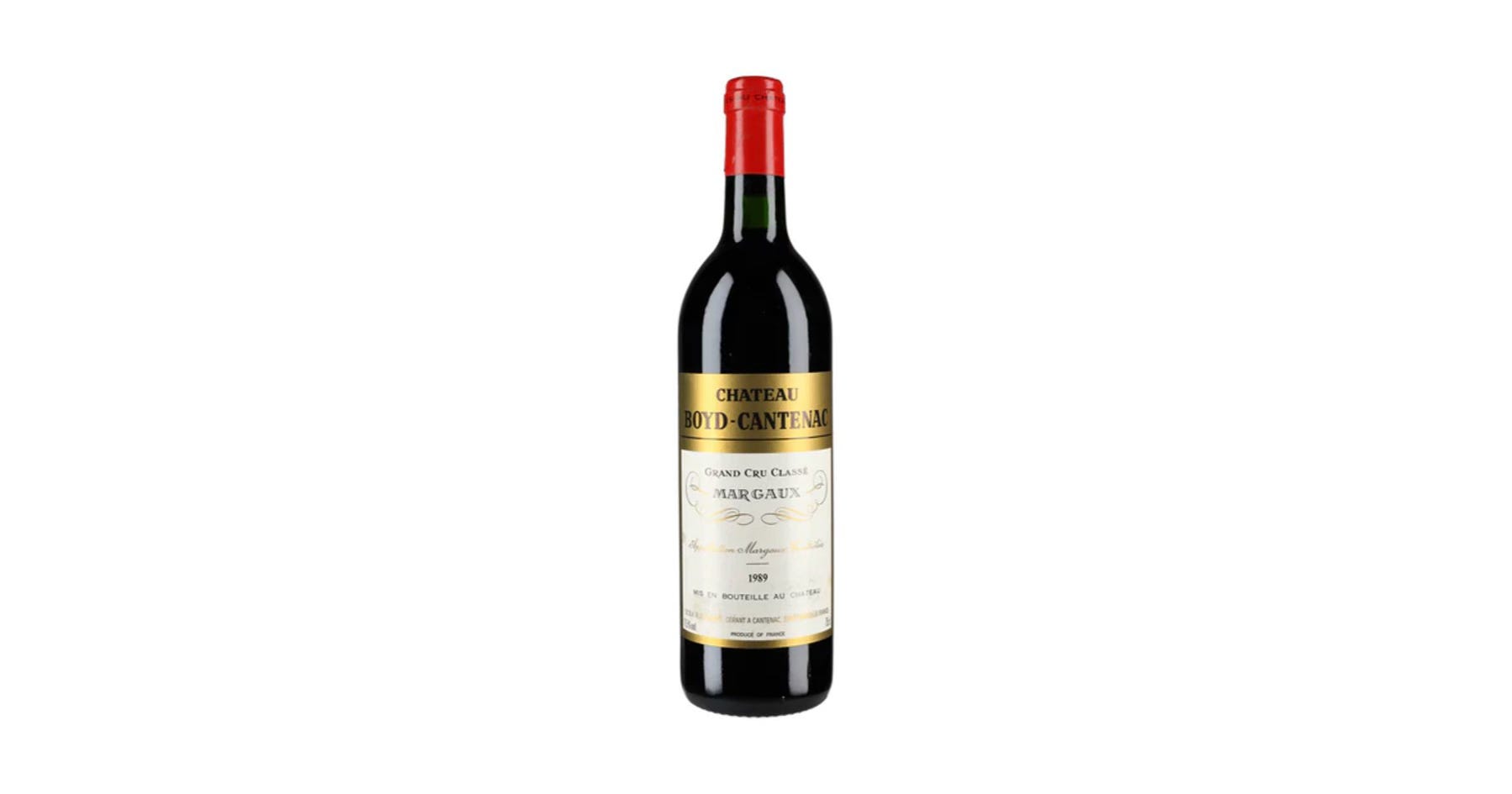
Château Boyd-Cantenac, Margaux
Bordeaux's most undervalued Third Growth: history, terroir, vintages, and the quiet rise of a classified Margaux hiding in plain sight
Introduction
Among the sixty-one estates consecrated in the Bordeaux Classification of 1855, Château Boyd-Cantenac occupies a position that is at once historically distinguished and commercially understated. Ranked a Troisième Cru Classé from the commune of Cantenac, within the Margaux appellation, the estate carries a classification pedigree that places it alongside such illustrious neighbours as Château Palmer, Château Kirwan, and Château d’Issan. Yet unlike those estates, Boyd-Cantenac has spent much of its modern history operating beneath the radar of international fine-wine commerce, a status that owes as much to deliberate family discretion as to any deficit in quality.
The estate’s story begins in 1754, when Jacques Boyd—an esquire from a prominent Irish wool-trading family based in Belfast—acquired vineyard land in the village of Cantenac. Boyd was part of a broader wave of Irish and Scottish merchants who emigrated to Bordeaux during the seventeenth and eighteenth centuries, establishing trading houses and acquiring vineyard properties throughout the Médoc. His name endures not only on the label of this estate but as testimony to a now largely forgotten chapter in the commercial history of Bordeaux: the profound influence of British and Irish entrepreneurs on the development of the region’s wine trade.
At the time of the 1855 Classification, the estate was known simply as “Boyd” and was ranked among the fourteen Troisième Crus of the Médoc—a tier that, by the pricing methodology of the period, indicated wines trading between 2,100 and 2,400 French francs per barrel. That price-based ranking reflected sustained commercial demand over the preceding four decades, from roughly 1815 to 1855, confirming that Boyd had been a consistent performer in the Bordeaux market of the early nineteenth century.
The estate’s trajectory through the late nineteenth and early twentieth centuries was considerably more turbulent. After the Classification, the property passed to Abel Laurent, under whose stewardship production of wine under the Boyd-Cantenac name effectively ceased; harvests were redirected into Laurent’s other estates. For a period the vineyard had no proper vinification facility in the Médoc, and wines were made at the neighbouring Château Lascombes. Production under the Boyd-Cantenac label was not restored until 1921, when Marcel Laurent revived the marque. In the 1930s, economic crisis hit the Ginestet family—then proprietors of numerous leading Bordeaux estates including Château Margaux—and in 1932, Pierre Guillemet, already owner of the neighbouring Château Pouget since 1906, purchased Boyd-Cantenac. The Guillemet family has held the property continuously since, through four generations, with Lucien Guillemet managing the estate today.
One of Boyd-Cantenac’s most distinctive characteristics is the absence of a château building. Unlike virtually every other Cru Classé, the estate possesses no manor house or grand architectural emblem. Its winemaking facilities are shared with Château Pouget, and its public profile has been further diminished by the family’s longstanding decision not to participate in the Union des Grands Crus de Bordeaux—the powerful marketing consortium that organises international tastings and promotional events for 132 classified estates. This deliberate withdrawal from the machinery of modern fine-wine marketing has left Boyd-Cantenac largely invisible to all but the most attentive collectors and trade buyers.
And yet, for the discerning buyer, this invisibility has constituted an opportunity. The estate’s terroir—deep Quaternary gravel on the Cantenac plateau, surrounded by some of the most celebrated vineyard land in Bordeaux—is of undeniable pedigree. The vine age is mature, the planting density optimal, and recent vintages have demonstrated a marked upward trajectory in quality, with wines from 2005 onward receiving increasingly serious critical attention. Boyd-Cantenac has been described, with justification, as one of the last remaining value propositions in the 1855 Classification: a Third Growth whose pricing reflects decades of obscurity rather than any fundamental limitation of site or ambition.
This document is intended as a comprehensive reference for the wine professional, collector, and informed enthusiast. It examines every dimension of the estate—from the geological substrata beneath its vines to the arc of its market performance—with the seriousness that a Troisième Cru Classé of nearly three centuries’ standing deserves.
Vineyard and Terroir
Château Boyd-Cantenac’s vineyards occupy approximately 17 hectares within the commune of Cantenac—historically one of five communes entitled to the Margaux appellation, and since 2017 merged with the village of Margaux to form the administrative commune of Margaux-Cantenac. The estate lies roughly 25 kilometres north of the city of Bordeaux, on the Left Bank of the Gironde estuary, within the heart of the Haut-Médoc.
Soil Composition and Geological Context
The vineyard is planted in siliceous gravels characteristic of the finest sites in the Margaux appellation. These are Quaternary alluvial deposits—large Garonne gravel combined with average-sized pebbles, sand, and minor clay fractions—laid down over nearly three million years by the ancestral courses of the Garonne and Dordogne rivers. The surface layer is exceptionally well drained, lean in organic matter and nutrients, and composed of rounded quartz pebbles interspersed with ironstone fragments. Beneath this gravel mantle lies a complex subsoil structure of limestone, marl, and clay from the Tertiary period, creating a multi-layered soil profile that is one of the distinguishing features of the Margaux terroir.
This soil architecture has two critical viticultural consequences. First, the gravel provides outstanding natural drainage, forcing vine roots deep into the subsoil in search of water and nutrients—a stress mechanism that is widely understood to concentrate flavour and promote phenolic complexity in the resulting fruit. Second, the gravel functions as a thermal reservoir: the pale, reflective stones absorb solar radiation during the day and release it as radiant heat during the night, extending the effective ripening period and promoting the full physiological maturity of Cabernet Sauvignon, which dominates the estate’s plantings.
Margaux is recognised as having the thinnest topsoil and the highest proportion of gravel of any appellation in the Médoc. Boyd-Cantenac’s parcels sit on the Cantenac plateau, in an area of deep gravel terraces that is also home to Château Brane-Cantenac, Château Kirwan, and Château Pouget. The concentration of Crus Classés in this immediate vicinity is among the highest in the entire Bordeaux region, confirming the exceptional quality of the geological substrate.
Exposure, Altitude, and Microclimate
The Cantenac plateau is gently undulating terrain, with modest elevations that nonetheless play a significant role in air drainage and frost avoidance. The proximity of the Gironde estuary provides a moderating maritime influence, tempering winter cold and summer heat, while the gravel soils radiate warmth in a manner that further buffers against late-spring frost—a persistent risk in the Médoc. The vineyard benefits from good air circulation, which reduces humidity and fungal pressure, a consideration of growing importance in the context of climate change.
Vine Age and Planting Density
The estate reports an average vine age of approximately 42 years and a planting density of 10,000 vines per hectare—the upper end of the range typical for the Haut-Médoc and consistent with the practices of the leading Crus Classés. High-density planting increases competition between individual vines for water and nutrients, naturally restricting yields and concentrating fruit character. The presence of substantial old-vine material contributes depth and complexity to the grand vin, while younger plantings are typically directed to the second wine.
Farming Philosophy
Available estate documentation describes a practice of lutte raisonnée—reasoned, integrated pest management—rather than full organic or biodynamic certification. This approach, common among Médoc Crus Classés, permits selective chemical intervention when necessary while emphasising soil health, cover cropping, and minimised inputs. The estate’s lean, free-draining gravel soils are naturally resistant to many of the fungal pressures that afflict heavier, more clay-rich terroirs, reducing the need for aggressive treatments.
Climatic Sensitivity
The terroir of Boyd-Cantenac, like all great Margaux sites, is acutely sensitive to vintage variation. The gravel soils’ excellent drainage is a decisive advantage in wet years, preventing waterlogging and dilution; in drought years, however, the shallow, nutrient-poor topsoil can impose severe hydric stress, particularly on younger vines with less developed root systems. The estate’s relatively high proportion of Cabernet Sauvignon makes it especially dependent on warm, extended autumns for full phenolic ripeness—a condition that has become more reliably achieved in recent decades due to the warming climate, and which partly explains the quality gains of the twenty-first century.
Grape Composition and Viticultural Choices
The encépagement of Château Boyd-Cantenac reflects the classic Left Bank profile, dominated by Cabernet Sauvignon with supporting roles for Merlot, Petit Verdot, and Cabernet Franc. The precise proportions vary slightly according to vintage and source, but the general framework is approximately 60–67% Cabernet Sauvignon, 24–25% Merlot, 7–9% Petit Verdot, and up to 8% Cabernet Franc.
Cabernet Sauvignon
Cabernet Sauvignon is the estate’s dominant variety and the structural backbone of its wines. At 60–67% of the blend, it is planted primarily on the deepest, best-drained gravel parcels, where it achieves the phenolic concentration and tannic architecture that define the estate’s identity. Cabernet Sauvignon’s late-ripening character is well suited to the thermal properties of Boyd-Cantenac’s gravel soils, and the variety’s thick skin provides the raw material for the firm, fine-grained tannin structure that underpins the wine’s aging potential.
Merlot
Merlot, at roughly a quarter of the blend, provides mid-palate flesh, aromatic generosity, and a supple textural counterpoint to the austerity of Cabernet Sauvignon. It is typically planted on parcels with a slightly higher clay content in the subsoil, where it ripens more reliably and contributes roundness and fruit density. Merlot’s earlier ripening cycle also provides a measure of insurance against poor autumn weather, allowing the estate to secure a portion of its harvest before the risks of late-season rain.
Petit Verdot and Cabernet Franc
Petit Verdot, at 7–9%, is an increasingly important component. This late-ripening variety contributes deep colour, aromatic complexity—often described in terms of violets, spice, and graphite—and a structural intensity that reinforces the wine’s tannic framework. Cabernet Franc, at up to 8%, brings aromatic finesse, herbal nuance, and a textural elegance that can lift and refine the final blend. Together, these minority varieties act as seasoning, adding dimensions that neither Cabernet Sauvignon nor Merlot alone can provide.
Historical Changes
Prior to the phylloxera crisis of the late nineteenth century, the vineyard is believed to have included plantings of Tarney Coulant (also known as Gros Cabernet), a variety now virtually extinct in Bordeaux. The progressive replanting of the vineyard during the twentieth century shifted the encépagement toward the modern profile, with Cabernet Sauvignon’s dominance increasing as the estate invested in its best gravel parcels and as viticultural understanding of variety-terroir matching improved.
Yield Control
Yield management is a critical factor in the quality of Boyd-Cantenac’s wines. The high planting density of 10,000 vines per hectare inherently restricts per-vine yield through root competition, while the lean, gravelly soils impose their own natural discipline. Additional yield control is achieved through green harvesting (vendange verte), shoot thinning, and leaf removal, all calibrated to the conditions of the individual vintage. The estate’s average annual production of 50,000 to 90,000 bottles from 17 hectares suggests yields that are moderate by Médoc standards, consistent with a commitment to concentration over volume.
IV. Vinification and Élevage
Harvest and Sorting
Harvest at Boyd-Cantenac is conducted parcel by parcel, with picking dates determined by phenolic ripeness assessments rather than sugar levels alone. The estate employs both manual harvesting and rigorous sorting protocols, with fruit selection at the vineyard level followed by additional sorting at the winery. This multi-stage approach ensures that only healthy, optimally ripe berries enter the fermentation vessels, a practice that has become increasingly critical in the era of climate-driven vintage variation.
Fermentation
Vinification takes place in temperature-controlled stainless steel vats and concrete tanks, with individual vessel capacities ranging from 50 to 150 hectolitres. The use of multiple vessel sizes allows parcel-by-parcel vinification, preserving the distinct character of each plot and providing maximum flexibility during the assemblage. Temperature control during fermentation is precise, enabling the winemaking team to manage extraction rates and preserve aromatic freshness.
Maceration periods range from two to five weeks depending on vintage conditions, the character of the fruit, and the desired extraction profile. Shorter macerations tend to be employed in lighter vintages to avoid over-extraction of harsh tannins, while longer macerations in ripe, concentrated years draw out the deep, fine-grained tannin structure that characterises Boyd-Cantenac in its best expressions. Malolactic fermentation is conducted in vat, ensuring complete conversion of malic to lactic acid before the wine enters barrel.
Oak Ageing
Following fermentation, the wine is aged for 12 to 18 months in French oak barrels, with the proportion of new oak ranging from 30% to as high as 60–80% depending on the vintage. The variation in new-oak percentage is significant: in years of exceptional concentration, a higher proportion of new wood is used to match the wine’s structural weight, while in lighter years the percentage is reduced to avoid dominating the fruit. The specific forest origins and coopers employed are not widely publicised by the estate, consistent with the Guillemet family’s characteristically discreet approach to technical disclosure.
The élevage philosophy at Boyd-Cantenac is oriented toward integration and polish rather than oak-driven flavour. The barrel programme is designed to provide a controlled micro-oxygenation environment that softens tannins, stabilises colour, and allows the wine to develop complexity without imposing aggressive toasty or vanilla-dominant character. This approach is consistent with the broader Médoc tradition and distinguishes the estate from more overtly modern, heavily oaked styles.
Assemblage and Bottling
The final assemblage is determined through extensive tasting of individual lots during the ageing period. Only those lots that embody the greatest potential and complementarity are selected for the grand vin; the remainder is directed to the estate’s second wines—Jacques Boyd (introduced in 1997), Joséphine de Boyd, and La Croix de Boyd-Cantenac. This rigorous selection process, typical of serious Cru Classé production, means that the grand vin represents a curated expression of the best parcels and the best barrels of a given year.
Bottling is conducted at the estate. The wine is typically fined and lightly filtered before bottling, though the specific agents and protocols are not disclosed. The resulting wines are built for medium- to long-term cellaring, with a structural profile that rewards patience.
Vintage-by-Vintage Analysis
The following survey traces Boyd-Cantenac’s trajectory through every major vintage from the pre-war period to the present. Because the estate ceased production for a period in the late nineteenth and early twentieth centuries, the continuous modern record begins effectively with the restoration of the label in 1921. The analysis below focuses on those vintages for which credible documentation, critical assessment, or direct tasting evidence exists.
The Pre-War and Immediate Post-War Era (1921–1949)
1945
The legendary 1945 vintage—the first post-Liberation harvest—produced wines of extraordinary concentration across the Médoc, and Boyd-Cantenac is documented as having produced an excellent wine, though surviving bottles are exceptionally rare. The vintage was marked by tiny yields, searing summer heat, and intensely concentrated fruit; wines from this year, where properly stored, have demonstrated near-immortal longevity.
1947
The 1947 vintage, celebrated for opulence and exotic richness throughout Bordeaux, is confirmed as one of Boyd-Cantenac’s finest early productions. The extreme heat of the growing season produced wines of lavish ripeness, though with less structural definition than the 1945s. Bottles are essentially collectors’ artefacts today.
1949
Another outstanding post-war vintage, the 1949 combined the concentration of 1945 with greater balance and aromatic refinement. Boyd-Cantenac’s production from this year is recorded as excellent, though the estate’s low profile during this period means that provenance-verified bottles are scarce.
The Classical Period (1950–1969)
1953
The 1953 is widely regarded as one of the great Margaux vintages of the mid-century, producing wines of exceptional charm, fragrance, and silky texture. Boyd-Cantenac’s contribution to this vintage is confirmed in grand cru records. The warm, dry growing season favoured the estate’s Cabernet-dominant profile, and wines from 1953, though now at or past their peak, would have shown the graceful, perfumed character for which Margaux is celebrated.
1955
A stellar vintage for the Left Bank, the 1955 produced wines of classical structure and restrained elegance—the antithesis of the voluptuous 1947. Boyd-Cantenac’s 1955 is rated as outstanding, with a structural profile that would have rewarded decades of cellaring.
1959
The 1959 was a year of generous warmth and low yields, producing sensual, supple wines throughout the Médoc. Boyd-Cantenac’s 1959 is described as outstanding, with a suppleness in its youth that may have led many bottles to be consumed early in anticipation of the more tannic 1961s. Survivors from impeccable cellars would still offer compelling, evolved drinking.
1961
The 1961 remains one of the most celebrated Bordeaux vintages of the twentieth century—tiny yields from a frost-ravaged spring followed by perfect summer conditions produced wines of legendary concentration and structure. Boyd-Cantenac’s 1961, where well stored, is reported to have been big, concentrated, and tannic in its youth, and bottles from impeccable provenance could still offer extraordinary drinking. The rarity of this vintage at Boyd-Cantenac makes it primarily a subject of historical interest.
1966
A classical vintage of structured, long-lived wines, the 1966 is rated at approximately 90 points by Wine-Searcher aggregation. This was a year that rewarded patience, and Boyd-Cantenac’s version would have demonstrated the firm tannic architecture and gradual aromatic unfolding characteristic of great Médoc Cabernet from cool, late-ripening years.
The Decade of Transition (1970–1979)
1970
The 1970 vintage marked the beginning of a wine-market boom and produced generous, accessible wines throughout the Médoc. Boyd-Cantenac’s 1970, rated approximately 89 points on CellarTracker, has been described in recent tastings as showing a moderately translucent, thin but surprisingly youthful ruby colour with evolved brick-orange hues, and an evolved, somewhat restrained nose of old furniture, pencil shavings, and cigar. The wine exemplifies the graceful, tertiary-dominated stage of mature Margaux—no longer about primary fruit, but about atmosphere and memory.
1975
The 1975 was a notoriously tannic vintage across Bordeaux, and many wines have struggled to shed their youthful austerity. Boyd-Cantenac’s 1975 is confirmed as excellent, though the estate’s relatively modest extraction regimen may have produced a wine that evolved more gracefully than the most brutally tannic examples from the vintage.
The Modern Classical Era (1982–1996)
1982
The 1982 vintage revolutionised the Bordeaux market and remains one of the defining reference points for Left Bank wine. Boyd-Cantenac produced a wine that is ranked among its historical best, though it should be noted that the estate’s relative obscurity during this period means that fewer bottles entered the market, and auction appearances remain uncommon. Recent auction realisations for the 1982 have ranged from approximately $126 to $130 per bottle—remarkably modest for a Third Growth from this legendary year, and indicative of the pricing discount that Boyd-Cantenac carries relative to its peers.
1985
The 1985 is a charming, approachable vintage that has aged well. Recent tastings of Boyd-Cantenac’s 1985 describe strong aromas of cedar, teakwood, and aged raspberries, with flavours of red cherry, spice, herbs, tobacco, and dark chocolate. The wine is described as juicy and delicious—a word rarely associated with classified Margaux, and suggestive of a wine that has found a sweet spot of tertiary development. An earlier assessment noted sweet, tasty plummy fruitiness, medium body, and low acidity, with a somewhat dull finish—a reminder that storage conditions profoundly affect the trajectory of older bottles.
1986
A vintage of powerful, structured wines throughout the Médoc, the 1986 produced Cabernet Sauvignon of exceptional concentration. Boyd-Cantenac’s contribution has been acknowledged, though specific critical documentation is limited. This was a year that strongly favoured Cabernet-dominant estates on deep gravel, suggesting that Boyd-Cantenac’s terroir was well positioned to excel.
1989
The 1989 is listed among Boyd-Cantenac’s excellent vintages and was a year of precocious warmth, producing generous, ripe wines with lower acidity than the structured 1988s or classic 1990s. The wine would have been relatively accessible in its youth.
1990
Another warm, generous year, the 1990 produced wines of opulence and concentration. Market pricing for Boyd-Cantenac’s 1990 ranges from approximately $130 to $171, reflecting both the vintage’s reputation and the wine’s increasing scarcity.
1995
The 1995 produced firm, structured wines in Margaux, and Boyd-Cantenac’s version has traded at auction in the range of $104–$105 per bottle. This is a vintage that rewarded medium-term cellaring and should now be approaching or within its optimal drinking window.
1996
The 1996 is a benchmark classical Margaux vintage—cool, late-ripening, producing wines of exceptional tannic precision and aromatic purity. Boyd-Cantenac scored in the 89–91 range with Robert Parker, and auction prices have ranged from $74 to $99—again, remarkably accessible for a Third Growth from a great year. The wine’s firm structure suggests that well-stored bottles may still have years of evolution ahead.
The Millennial Transition (1997–2004)
1997
A lighter vintage, the 1997 produced generous, supple wines with low acidity. Boyd-Cantenac’s version, rated approximately 85 on CellarTracker, has been described as loose-knit, classic Margaux with soft fruit and melted tannins, probably at or past its peak. This is a wine for near-term consumption if any bottles remain.
1998
The 1998, a good but not exceptional vintage in the Médoc, produced a Boyd-Cantenac rated approximately 85 on CellarTracker. Tasting notes describe a medium-bodied, smooth, and very elegant wine—somewhat light and subdued, with aromas of earth, blackcurrant, cedar, and dust. The wine is moderately persistent and deep, a respectful expression of the vintage without pretension.
2000
The 2000 is the definitive millennial vintage in Bordeaux—a year of exceptional quality across the Left Bank. Boyd-Cantenac scored 91 from James Suckling, reflecting the estate’s capacity to produce serious wine in great years. Drinking recommendations have extended to 2024 and beyond, and well-stored bottles should still be in fine condition.
2003
The 2003 was the vintage of the European heatwave—extreme temperatures produced atypical wines of massive concentration, low acidity, and sometimes unbalanced structure. Boyd-Cantenac scored 88 from Suckling, suggesting a wine that navigated the vintage’s excesses with reasonable success. The low acidity characteristic of 2003 Bordeaux means that most wines from this year are best consumed within 15–20 years of the vintage.
2004
A classical, coolish vintage that produced firm, structured wines, the 2004 scored 89 from Suckling. This is one of the estate’s better vintages from the early 2000s and should still be drinking well for those who enjoy restrained, traditionally styled Margaux.
The Quality Ascent (2005–2015)
2005
The 2005 represents a watershed for Boyd-Cantenac. The wine received 92 points from both Robert Parker and Wine Spectator, and carries an impressive 91.2 average on CellarTracker from 182 community reviews—by far the most-reviewed Boyd-Cantenac vintage in the database. The wine has been described as having very intense colour and nose with some oak and relatively simple blackcurrant juice character, but the overall assessment is of top-drawer quality. This was the vintage that announced Boyd-Cantenac’s arrival as a serious, modern Cru Classé, and it remains one of the best bottles to demonstrate the estate’s potential.
2008
A cooler, more challenging year, the 2008 produced a Boyd-Cantenac that averages 89.2 from seven CellarTracker reviews—a creditable result for a vintage that exposed many estates. The wine is likely at or near its peak.
2009
The 2009 is another high-water mark, scored at 90 by Parker and later upgraded to 94 by Falstaff in a 2020 reassessment. Tasting notes from the Wine Advocate describe blueberry liqueur, acacia flowers, liquorice, graphite, and wood smoke, with a profile that is flowery, elegant, exceptionally pure, medium to full-bodied, and admirably concentrated. The wine was projected to require five to eight years of cellaring and to last three decades—a drinking window that extends to at least 2039. The 2009 is essential evidence for the argument that Boyd-Cantenac’s terroir, when met with good winemaking, can produce wines of genuine complexity and longevity.
2010
The 2010 is the structural counterpart to the opulent 2009—a year of classical proportions, firm tannins, and exceptional aging potential. Boyd-Cantenac received approximately 90 points and is listed among the estate’s best vintages. The wine’s strong tannic framework suggests it has many years of evolution ahead and may ultimately rival the 2005 for supremacy in this decade.
2011, 2012, 2013, and 2014
This quartet of vintages represents a stretch of consistent, solid performance. The 2011, 2012, and 2013 each received approximately 90 points from major critics, with the 2013 notably winning a Berlin Wine Trophy Gold medal. The 2014 also scored around 90 points. These are well-made, mid-weight wines that lack the concentration of the great years but demonstrate the estate’s increasing reliability and the Guillemet team’s growing command of the cellar.
2015
The 2015 is a particularly successful vintage, scoring 91–93+ and winning a Figaro wine award at 95 points. The wine has been described as showing seashell freshness with a full-bodied mid-palate and enough lift on the finish to maintain what tasters call “Margaux excitement.” This is a generous, expressive Boyd-Cantenac with excellent aging potential.
The Current Era (2016–2023)
2016
The 2016 is arguably the most significant recent vintage for Boyd-Cantenac’s reputation. It received a Decanter three-star Coup de Coeur—a significant honour—and critics averaged approximately 90 points. One assessment described the wine as showing perfumed and sweet aromas with cinnamon, nutmeg, and blackberries, medium to full body, firm and silky tannins, and notable depth, finesse, and tension. Perhaps most tellingly, one critic wrote that it was “certainly a lot better than older vintages” and demonstrated “an elegance and sophistication which I’ve never encountered before” from this estate. This is the vintage that most clearly signals a shift in Boyd-Cantenac’s trajectory.
2017
A more modest vintage affected by spring frost across much of Bordeaux, the 2017 scored 89 from Parker and was described as a juicy, fruity Margaux appropriate to the year. Not a wine for extended cellaring, but a creditable performance in a challenging vintage.
2018
The 2018 returned to form with a Parker score of 91, and the wine has been described as showing cedar, rosemary, soft ripe fruits of raspberry and blackberry. This is among the estate’s strongest recent efforts, benefiting from the vintage’s exceptional warmth and dry harvest conditions.
2019
The 2019 marks a new high point: 92 points from Parker, with a projected drinking window of 2027–2042. Tasting notes describe a dark, concentrated nose with excellent structure, featuring grilled cedar, smoked coffee bean, vanilla, blackberry, and damson fruits. This is a wine of genuine ambition, and the extended drinking window suggests the estate has achieved a level of tannic finesse and balance that supports true long-term cellaring.
2020
Scored at 91 by Parker, the 2020 continues the estate’s upward trajectory. The vintage was marked by a warm, dry growing season that produced concentrated, ripe wines across the Left Bank.
2021
A cooler, more classical vintage, the 2021 averaged approximately 90 points across critics, with Wine Lister recording 92. This is a vintage that will appeal to those who prefer structure and freshness over opulence.
2022
The 2022 is the most favourably received of the very recent vintages, with James Suckling awarding 92 points and Alexandre Ma scoring 91. The wine shows the concentration and depth characteristic of this excellent hot-vintage year.
2023
Early barrel assessments place the 2023 at 86–88 from Parker and 90–92 from Alexandre Ma—a somewhat wider range that likely reflects the vintage’s uneven conditions and the early stage of tasting. Final scores after bottling may revise upward.
Style, Identity, and Structural Sensory Profile
Boyd-Cantenac’s stylistic identity has evolved considerably over the past three decades, moving from a profile that critics often described as light, somewhat diffuse, and inconsistent to one that demonstrates increasing density, precision, and structural conviction. Understanding this evolution is essential for any serious assessment of the estate.
The Historical Style
Through much of the twentieth century, Boyd-Cantenac produced wines that were recognisably Margaux in their aromatic profile—perfumed, elegant, with a certain ethereal quality—but that often lacked the structural depth and mid-palate density of the appellation’s leading estates. The wines tended toward medium body, moderate extraction, and relatively soft tannins, making them accessible in their youth but sometimes short on the concentration required for long-term development. This lighter style was not necessarily a defect—it reflected both the modest ambitions of the mid-century winemaking regime and a philosophy that favoured delicacy over power—but it did not always justify the estate’s Third Growth classification in the eyes of critics and collectors who expected more substance.
The Modern Transformation
Beginning approximately with the 2005 vintage and accelerating through the 2010s, Boyd-Cantenac’s wines have become darker, more intense, and more structured. This shift reflects a convergence of factors: the increasing maturity of vine material, more rigorous selection in both vineyard and cellar, investments in temperature-controlled fermentation, and the broader warming of the Bordeaux climate, which has facilitated fuller phenolic ripeness. The wines of the current era show significantly greater colour depth, tannic density, and aromatic complexity than their predecessors, without sacrificing the essential Margaux character of finesse and aromatic lift.
Core Structural Signature
Across its best vintages, Boyd-Cantenac’s grand vin is built on a framework of firm but fine-grained tannin, underpinned by good acidity and a textural density that provides mid-palate substance without heaviness. The Cabernet Sauvignon dominance gives the wine a strong skeletal structure—what one might describe as an architectural quality—while the Merlot component provides the flesh and fruit density that makes the wine approachable within a decade of the vintage. Petit Verdot adds colour stability and a certain aromatic gravitas, while Cabernet Franc contributes the kind of aromatic finesse—herbal, floral, mineral—that lifts the wine on the finish.
The textural signature is distinctly Margaux: the tannins, even in their youth, tend toward silk and powder rather than the more muscular, gripping profile of a Pauillac or Saint-Julien. In mature examples, this translates to a wine of considerable elegance, where the structural elements have receded into the background and the palate is dominated by tertiary complexity and length. The finish is typically long and fine-grained, with a subtle mineral undertone that reflects the gravel terroir.
Comparative Identity
Within the Margaux appellation, Boyd-Cantenac occupies a middle ground between the power and depth of Château Palmer—which regularly produces wines of Second Growth quality and carries a significantly higher Merlot proportion—and the more austere, Cabernet-driven character of estates like Château Rauzan-Ségla. It is less voluptuous than Château Margaux itself but shares something of that estate’s emphasis on aromatic refinement over sheer concentration. Among its Third Growth peers, Boyd-Cantenac’s recent vintages have been compared favourably with Château Cantenac Brown, though the latter has had greater international visibility and a more aggressive marketing presence.
The estate’s wines are described as being among the most representative of the traditional Margaux style: elegant, subtle, complex, dense when conditions allow, fresh, long, and marked by a finesse that distinguishes the commune from the more assertive characters of the northern Médoc.
Aging Potential and Cellaring
General Aging Trajectory
Boyd-Cantenac’s wines are built for medium- to long-term cellaring. In their youth (the first five to seven years), the wines typically show primary fruit character overlaid with oak influence, with tannins that are firm but not aggressive. The mid-life phase (eight to fifteen years) sees the integration of tannins, the emergence of secondary complexity—cedar, tobacco, earth, leather—and the development of the textural silkiness that characterises mature Margaux. Beyond fifteen years, the best vintages enter a tertiary phase of evolved, atmospheric character: dried herbs, graphite, cigar box, truffle, and the indefinable quality that collectors describe as “soulfulness.”
Vintage-Specific Aging Evidence
The 1970, now over five decades old, has demonstrated remarkable preservation in well-stored examples, retaining colour, structure, and aromatic interest despite its age. The 1982, 1985, and 1990 are all confirmed as still offering rewarding drinking where provenance is impeccable. The 2005 and 2009 vintages, with their greater concentration and tannic structure, are projected to age gracefully for at least three decades from the vintage—the 2009 specifically has a documented drinking window extending to 2039 and beyond. The 2019, with its 2027–2042 projected window, suggests that the current generation of Boyd-Cantenac wines has achieved a level of structural balance that supports genuinely long-term cellaring.
Recommended Cellaring Conditions
Optimal storage conditions for Boyd-Cantenac follow the standard protocol for fine Bordeaux: a stable temperature of 12–14°C (54–57°F), relative humidity of 65–75%, absence of light and vibration, and bottles stored on their sides to maintain cork contact. Temperature stability is more important than the absolute temperature; fluctuations are the primary enemy of long-term aging. Cork quality is a variable that the consumer cannot control, and older vintages (pre-2000) inevitably carry some risk of cork-related deterioration.
Risks of Extended Aging
The principal risk of extended cellaring with Boyd-Cantenac—particularly for vintages from the lighter era of the 1990s and early 2000s—is that the wine’s relatively modest concentration may not sustain a very long evolutionary arc. Wines from lighter vintages (1997, 1998, 2003, 2004) are generally best consumed within fifteen to twenty years. The great vintages (1982, 2005, 2009, 2010, 2016, 2019) have the structural reserves for much longer aging, potentially thirty years or more. As with all classified Bordeaux, provenance is paramount: a perfectly stored bottle from a modest vintage will outperform a badly stored bottle from a legendary year.
Market Value and Investment Perspective
Historical Pricing
Boyd-Cantenac has been consistently among the most affordable wines in the 1855 Classification. Recent-vintage release prices hover in the range of $60–$70 per bottle ex-tax—a fraction of the cost of higher-profile Margaux estates and a remarkable price point for a Troisième Cru Classé. For context, Château Palmer (also a Third Growth, though functionally priced as a Super Second) trades at multiples of this level, and even less celebrated Margaux Crus Classés such as Château Cantenac Brown now command significantly higher prices.
Older vintages remain equally accessible by classified-growth standards. The 1982—from one of the most celebrated Bordeaux vintages of all time—has traded at auction for $126–$130. The 1990 ranges from $130 to $171. The 1996, a classical vintage of considerable quality, has been available for as little as $74. These prices are anomalous within the 1855 framework and reflect the estate’s historical invisibility rather than any deficiency in quality.
Production Volume and Scarcity
Annual production ranges from 50,000 to 90,000 bottles, split approximately two-thirds grand vin and one-third second wine. This places the grand vin production at roughly 33,000 to 60,000 bottles per year—a moderate volume by Médoc standards, comparable to many of its Third Growth peers. The wine is not scarce in the way that micro-production cult wines are, but neither is it abundantly available, particularly in export markets where the estate’s non-participation in the Union des Grands Crus has limited its distribution network.
Secondary Market Liquidity
Boyd-Cantenac’s secondary-market liquidity is limited compared to the most actively traded Bordeaux estates. The wine does not appear frequently on Liv-ex and is not tracked by the major fine-wine indices with the same granularity as First Growths or Super Seconds. Auction appearances are relatively infrequent, and when they do occur, the lots tend to sell at or near estimate rather than generating competitive bidding. This low liquidity is a double-edged consideration: it depresses resale value for investors seeking quick turnover, but it also means that the wine can often be acquired at prices below its intrinsic quality level.
Investment Considerations
Boyd-Cantenac’s appeal is primarily to the collector-drinker rather than the pure financial investor. The estate’s low profile, limited marketing infrastructure, and absence from the major trade indices mean that it does not benefit from the speculative demand that drives prices for more commercially visible estates. Its investment case rests on a different thesis: that a Troisième Cru Classé with improving quality, low current pricing, and a terroir of demonstrated excellence represents a value opportunity that may eventually be recognised by the broader market.
The risks are equally clear. The estate’s deliberate avoidance of promotional activity limits its upside potential in a market increasingly driven by brand recognition, critical scores, and social-media visibility. A stylistic shift, a change in ownership, or increased competitive pressure from well-marketed estates at similar price points could further compress margins. Conversely, the ongoing warming of the Bordeaux climate may continue to benefit the estate’s Cabernet-dominant profile, and any future decision to engage more actively with international marketing channels could unlock latent demand.
For the collector who buys wine primarily to drink it, Boyd-Cantenac offers an uncommon proposition: classified Margaux of increasing quality at prices that would be unrecognisable for any other Third Growth on the 1855 list. This is, in the plainest terms, a buyer’s market.
Cultural and Gastronomic Significance
Historical and Cultural Context
Boyd-Cantenac’s origins in the Prieuré de Cantenac—an ecclesiastical estate established around the year 1000 by monks from the Abbey of Vertheuil—connect the property to the very earliest history of viticulture in the Médoc. The priory thrived in part because of its location on the pilgrimage route to Santiago de Compostela, one of the great arteries of medieval European commerce and culture. Wine from Cantenac would have been consumed by pilgrims and travellers for centuries before Jacques Boyd gave his name to the estate, situating Boyd-Cantenac within a viticultural tradition that predates the modern concept of Bordeaux Château bottling by nearly a millennium.
The estate is one of approximately fourteen Bordeaux châteaux bearing Irish or Scottish names—a legacy of the remarkable commercial relationship between the British Isles and Bordeaux that shaped the region’s wine trade from the Middle Ages through the eighteenth century. This Anglo-Irish heritage, though now largely forgotten in the contemporary marketing of Bordeaux, is an integral part of the region’s identity and one that Boyd-Cantenac embodies more directly than most.
Presence on Wine Lists and at Tastings
Boyd-Cantenac’s low public profile has limited its representation on celebrated restaurant wine lists and at historic tastings. The estate’s decision not to participate in the Union des Grands Crus de Bordeaux has excluded it from the organisation’s high-profile international events, which are among the most important platforms for brand visibility in the fine-wine trade. Nonetheless, the wine appears on specialist lists and in the cellars of knowledgeable private collectors, where its quality-to-price ratio has quietly built a loyal, if narrow, following.
Gastronomic Relevance
As a Margaux of classical proportions, Boyd-Cantenac is a natural companion to the cuisine of southwestern France. The traditional pairing with roast lamb—preferably leg of lamb seasoned with herbes de Provence and accompanied by roasted root vegetables—remains one of the most reliable matches, the slight gami-ness of the meat harmonising with the wine’s earthy, herbal undertones. More broadly, the wine’s structural elegance and moderate tannin profile make it a versatile table companion for grilled and roasted meats of all kinds: beef, veal, duck, pigeon, and game.
At different stages of maturity, the wine calls for different culinary approaches. Young Boyd-Cantenac (five to ten years old), with its firmer tannins and primary fruit character, pairs well with richer, more robustly flavoured dishes: braised beef, coq au vin, cassoulet. Mature Boyd-Cantenac (fifteen to twenty-five years), with its softer tannins and tertiary complexity, is better suited to simpler preparations that allow the wine’s nuance to emerge: roast chicken with truffle, grilled squab, or a plate of aged hard cheeses. The wine’s refinement argues against heavily spiced or overly complex dishes, which risk overwhelming its delicacy.
Conclusion
Château Boyd-Cantenac is a study in the tension between classification pedigree and commercial visibility—between the objective quality of a site and the subjective perception of a brand. Its terroir, on the deep gravels of the Cantenac plateau, is surrounded by some of the most celebrated vineyard land in Bordeaux. Its classification as a Troisième Cru in 1855 confirmed that the estate was, by the pricing standards of the time, among the most consistently valued properties in the Médoc. Its vine age is mature, its planting density optimal, its winemaking increasingly refined.
And yet, for much of the twentieth century, Boyd-Cantenac underperformed its classification—not dramatically, but persistently enough to relegate it to the margins of critical and commercial attention. The reasons are well documented: a period of non-production, the absence of a château building, shared facilities with Pouget, non-participation in the Union des Grands Crus, and a family ownership that has valued discretion over promotion. The result has been a wine that is simultaneously classified and unknown, prestigious and affordable, historically significant and commercially marginal.
The twenty-first century has seen a meaningful change in this narrative. Beginning with the 2005 vintage and accelerating through the 2010s, Boyd-Cantenac has produced wines of increasing depth, precision, and structural conviction. The 2009, 2010, 2015, 2016, and 2019 vintages, in particular, demonstrate a level of quality that is fully commensurate with Third Growth status and, in the best cases, approaches the standard of higher-ranked estates. The estate’s critical reception has warmed correspondingly, and the most attentive commentators have begun to identify Boyd-Cantenac as one of the most compelling value propositions in the 1855 Classification.
For the serious collector, the implications are clear. Boyd-Cantenac offers classified Margaux of genuine quality at prices that bear no relationship to the cost of comparable wines from better-known estates. Its best vintages are built for long-term cellaring and demonstrate the kind of terroir-driven complexity that justifies the effort and expense of fine-wine collecting. Its relative obscurity, while limiting its resale value, also means that acquisition remains straightforward and competitive pressures minimal.
Whether the estate will eventually achieve the broader recognition that its terroir and recent quality deserve is an open question. A more active marketing strategy, greater participation in international tastings, or a generational change in approach could transform Boyd-Cantenac’s commercial profile within a decade. Equally, the family may continue to prefer the quiet satisfaction of making excellent wine without the performative demands of the modern fine-wine market. Either way, the wine itself—in the glass, in the cellar, on the table—speaks with increasing authority. For those who listen, it has a great deal to say.