
For most fine wine, ageing is associated with stillness: a dark cellar, a stable temperature and as little disturbance as possible. A collection of Chablis wine from La Chablisienne has followed a rather different path.
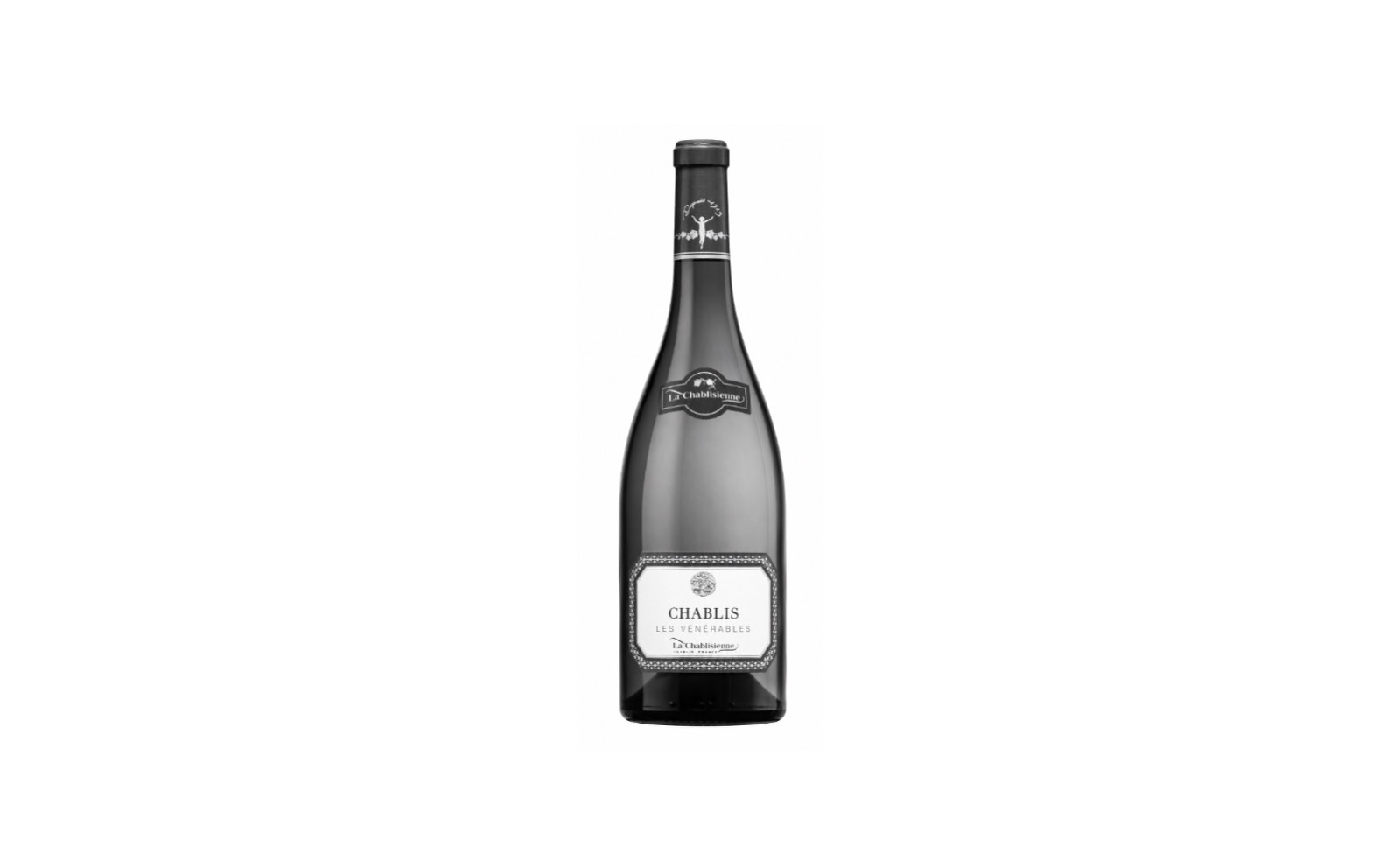
Instead of remaining quietly in Burgundy, 120 magnums of the cooperative’s Les Vénérables 2017 spent nine months aboard the Persévérance, the sailing vessel of French explorer Jean-Louis Etienne. Stored in the ship’s hold, the bottles covered some 30,200 nautical miles — roughly 55,000 kilometres — on a voyage extending from Arctic to Antarctic waters.
They returned to France carrying no scientific certificate that the sea had made them better. What they did offer was something more intriguing: an opportunity to consider how temperature, pressure and constant movement might influence the development of mature Chablis.
Chablis wine far beyond the cellar
The choice of wine was significant. Les Vénérables is made from old Chardonnay vines and, in the 2017 vintage, had already accumulated several years of bottle age before embarking on its maritime journey.
Magnums also have particular relevance when discussing evolution in bottle. Their greater volume relative to the amount of oxygen enclosed beneath the closure generally makes them attractive formats for extended ageing. In this case, however, the bottles were subjected to conditions far removed from those of a conventional cellar.
Over nine months at sea, the wine encountered changing climates, variations in atmospheric pressure and the ceaseless motion of a vessel crossing major ocean systems. Persévérance itself was designed for demanding polar navigation, including waters where ice and severe Southern Ocean conditions form part of the environment.
That makes the experiment interesting not because it offers a new prescription for ageing Chablis, but because it deliberately disrupted some of the conditions usually considered desirable for wine conservation.
Did the voyage change the Chablis wine?
When the bottles reached Concarneau in March 2024, La Chablisienne’s managing director, Damien Leclerc, tasted the travelled wine. His impression was that the voyage had encouraged a more advanced evolution, with added aromatic complexity and a rounder texture.
Leclerc has suggested that the combination of moderate temperature changes, atmospheric-pressure fluctuations and the ship’s continuous movement may have played a role in that development.
Such observations deserve a degree of caution. A tasting impression is not the same thing as a controlled scientific trial, and the information released about the project does not establish that ocean travel accelerates wine ageing in a predictable or universally beneficial way. Many variables would need to be isolated before firm conclusions could be drawn.
Even so, the idea is not without interest. Wine is a chemically active environment, and its evolution depends on numerous factors, including temperature, oxygen exposure and time. Transport and vibration have also long generated discussion among collectors, producers and researchers. A nine-month intercontinental voyage therefore creates an unusually dramatic setting in which to revisit an old question: just how sensitive is wine to its physical surroundings after bottling?
When movement becomes part of the ageing story
There is an appealing paradox here. Serious wine storage is built around control. Temperature swings are discouraged. Bottles are kept still. Light is excluded. Cellars are designed precisely to remove the unpredictability that defined this journey.
Yet wine history has never been completely motionless. Bottles and barrels have crossed seas for centuries, and merchants have often noticed differences between wines that travelled and those that remained closer to home. Such observations have produced both genuine technical inquiry and a fair amount of romantic mythology.
The Persévérance bottles sit somewhere between those two traditions. They should not be regarded as evidence for a new method of maturing Chablis. But they do provide a rare comparison between the idea of wine as a carefully protected object and wine as something exposed to movement, geography and changing environmental conditions.
For lovers of Chablis, that contrast is particularly compelling. The region’s wines are often admired for precision, freshness and their capacity to acquire greater breadth and complexity with bottle age. Watching those characteristics develop under such unconventional circumstances gives the project more substance than a simple publicity voyage.
A maritime connection behind the project
The experiment grew out of a relationship between Leclerc and Jean-Louis Etienne that stretches back decades.
Leclerc, who is also a reserve naval officer, first encountered Etienne’s world while working as a trainee at the French marine research institute Ifremer in the 1990s. At the time, Etienne’s scientific vessel Antarctica called at Camaret in Brittany.
Their paths crossed again many years later, and the connection eventually led to Etienne attending La Chablisienne’s centenary celebrations in 2023. From that renewed contact came the idea of placing a small quantity of the cooperative’s wine aboard Persévérance.
It is an unusual meeting of two very different French landscapes: the limestone slopes of northern Burgundy and the open waters explored by a polar sailing vessel.
Chablis wine in support of Southern Ocean research
The voyage also has a purpose beyond the cellar.
The 120 magnums, now individually numbered and carrying an illustration of Persévérance, are due to be offered at auction in Neuilly-sur-Seine on 8 October 2026. Proceeds are intended to support future scientific missions associated with Jean-Louis Etienne in the Southern Ocean.
That connection gives the bottles an identity that cannot be reduced to their tasting profile. They are simultaneously bottles of mature Chablis, objects with an unusual provenance and part of a fundraising initiative connected with polar research.
For collectors, provenance normally means knowing precisely how little has happened to a wine: where it was stored, how stable the temperature remained and whether the bottle was moved. Here, almost the opposite is true. The provenance is remarkable because of what the bottles endured.
An experiment worth tasting with an open mind
It would be tempting to turn the story into proof that an ocean voyage can improve wine. The evidence does not justify such a conclusion. Nor should adventurous ageing become confused with the careful conditions required for long-term wine storage.
The more interesting lesson is subtler.
Wine continues to evolve after it leaves the winery, and that evolution is shaped by its environment. By sending 120 magnums of Chablis across 55,000 kilometres of ocean, La Chablisienne has created an extreme illustration of that simple fact.
Whether the sea truly accelerated the wine’s development, altered its texture or simply produced a different expression can only be judged with proper comparative tasting and analysis. But the experiment succeeds in raising a question that serious wine lovers rarely have reason to ask.
What happens when a wine famous for expressing a very particular piece of France is allowed, quite literally, to travel to the ends of the Earth?