
Castillon 2025: Tension, Limestone, and Precision
A structured reading of Castillon Côtes de Bordeaux, where freshness and mineral depth define a warm vintage
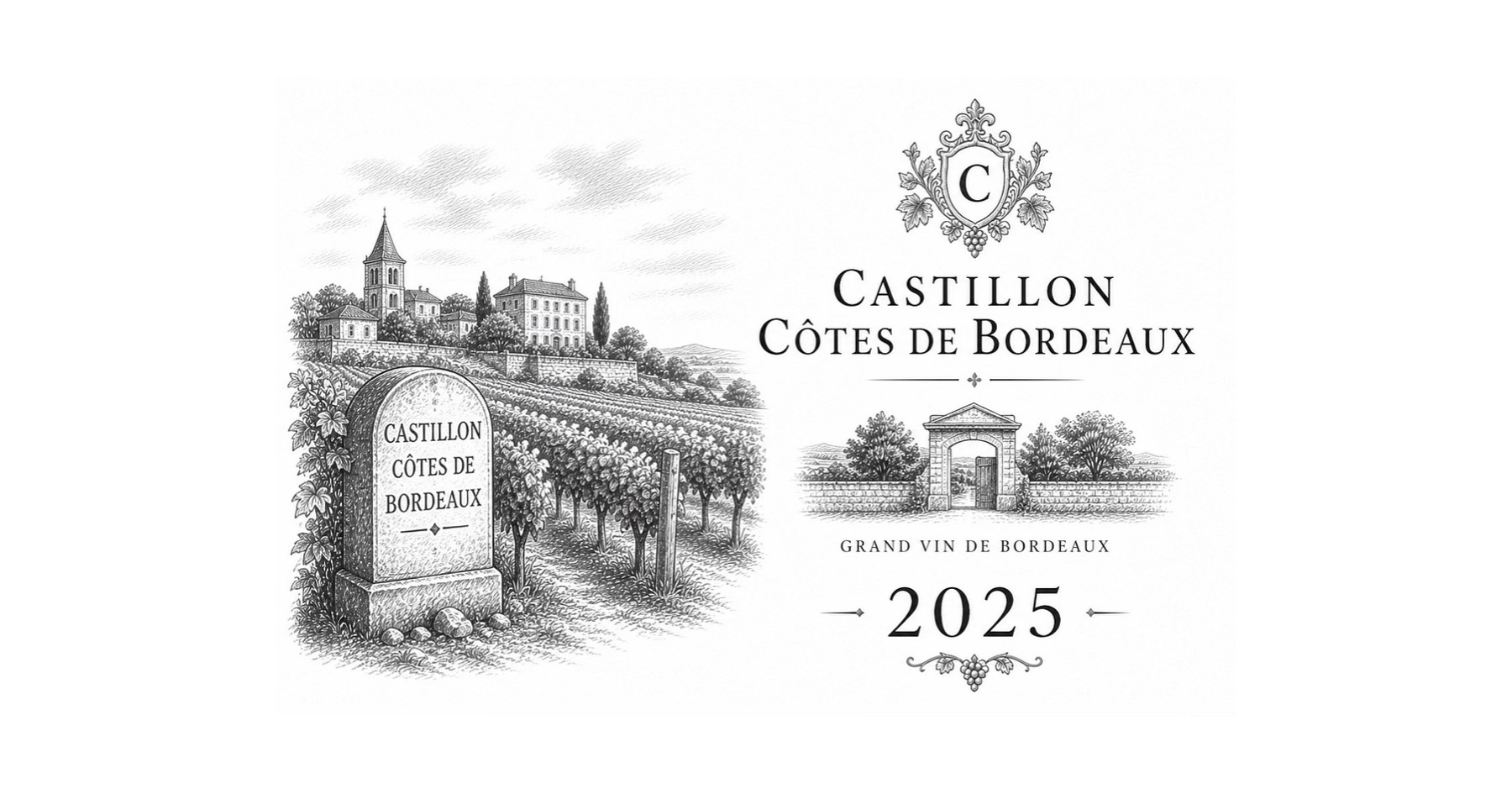
On the eastern edge of Saint-Émilion, Castillon Côtes de Bordeaux has steadily moved beyond its historical role as a peripheral appellation. The 2025 vintage reinforces this evolution, offering a compelling demonstration of how terroir—particularly limestone—can assert itself even under the pressures of a warm growing season.
The defining characteristic of the vintage in Castillon is not power, but tension. Across multiple estates, there is a consistent effort to preserve freshness within ripeness, resulting in wines that feel structured yet composed. This balance is neither accidental nor uniform; it reflects a deepening understanding of site-specific expression.
At Château Montlandrie, this equilibrium is particularly evident. Despite a degree of alcoholic richness, the wine retains a vivid sense of acidity, which anchors its structure. The tannic framework is firm, yet not excessive, allowing the fruit—suggestive of fresh raspberry—to extend with clarity. The presence of Cabernet, comprising a significant portion of the blend, contributes to both length and definition.
A different expression emerges at Château d’Aiguilhe, where aromatic generosity meets textural finesse. Orchard fruit, cassis, and a subtle note of blood orange create a layered aromatic profile, while the palate reveals a creamy texture interwoven with a distinctly chalky tannin. This tactile contrast—between softness and mineral grip—captures one of the essential tensions of the vintage.
The role of minerality becomes even more explicit in wines such as Château Joanin Bécot. Here, the aromatic register leans toward petrichor, lavender, and sage, with fruit receding into a supporting role. The wine reads as a direct translation of place, where soil composition dictates both structure and aromatic nuance.
This emphasis on terroir reaches a particularly focused expression in Clos Lunelles. While the initial impression suggests high maturity—driven by old Merlot vines—the fruit quickly gives way to a more dominant mineral core. The persistent freshness that accompanies this transition points toward a wine built for extended ageing rather than early approachability.
Among the most articulate interpretations of the vintage, Clos Puy Arnaud demonstrates how Cabernet varieties can redefine Castillon’s profile. The wine combines a vibrant freshness with a subtle rusticity, framed by a delicate mid-palate and an extended, limestone-driven finish. This interplay between structure and finesse underscores the potential of the appellation’s best sites.
Elsewhere, nuance continues to shape the narrative. Château La Brande offers a more fluid interpretation, where brightness of fruit and freshness coexist with a diffuse sense of power. Meanwhile, Château Le Rey - Les Rocheuses emphasizes mineral intensity, with notes of petrichor and dark fruit leading into a velvety texture and a distinctly saline finish.
Across the appellation, a pattern emerges: fruit is no longer the dominant lens through which these wines are understood. Instead, structure, minerality, and acidity define the experience. The warmth of the vintage has not erased these elements; rather, it has sharpened the need for precision in both vineyard and cellar.
The broader implication for Castillon Côtes de Bordeaux is significant. It is no longer sufficient to view the appellation through the prism of value or proximity to Saint-Émilion. The 2025 vintage suggests a more independent identity—one grounded in limestone expression and a capacity for balance under challenging climatic conditions.
For the attentive drinker, these wines offer a different kind of Bordeaux experience. They are less about immediate generosity and more about articulation: of soil, of structure, and of time. In this respect, Castillon 2025 stands not as an outlier, but as a continuation of a quiet, deliberate ascent.