

Burgundy’s Quiet Science of Longevity
How lees ageing, élevage choices and oxygen resistance are reshaping the understanding of white Burgundy’s ageing potential
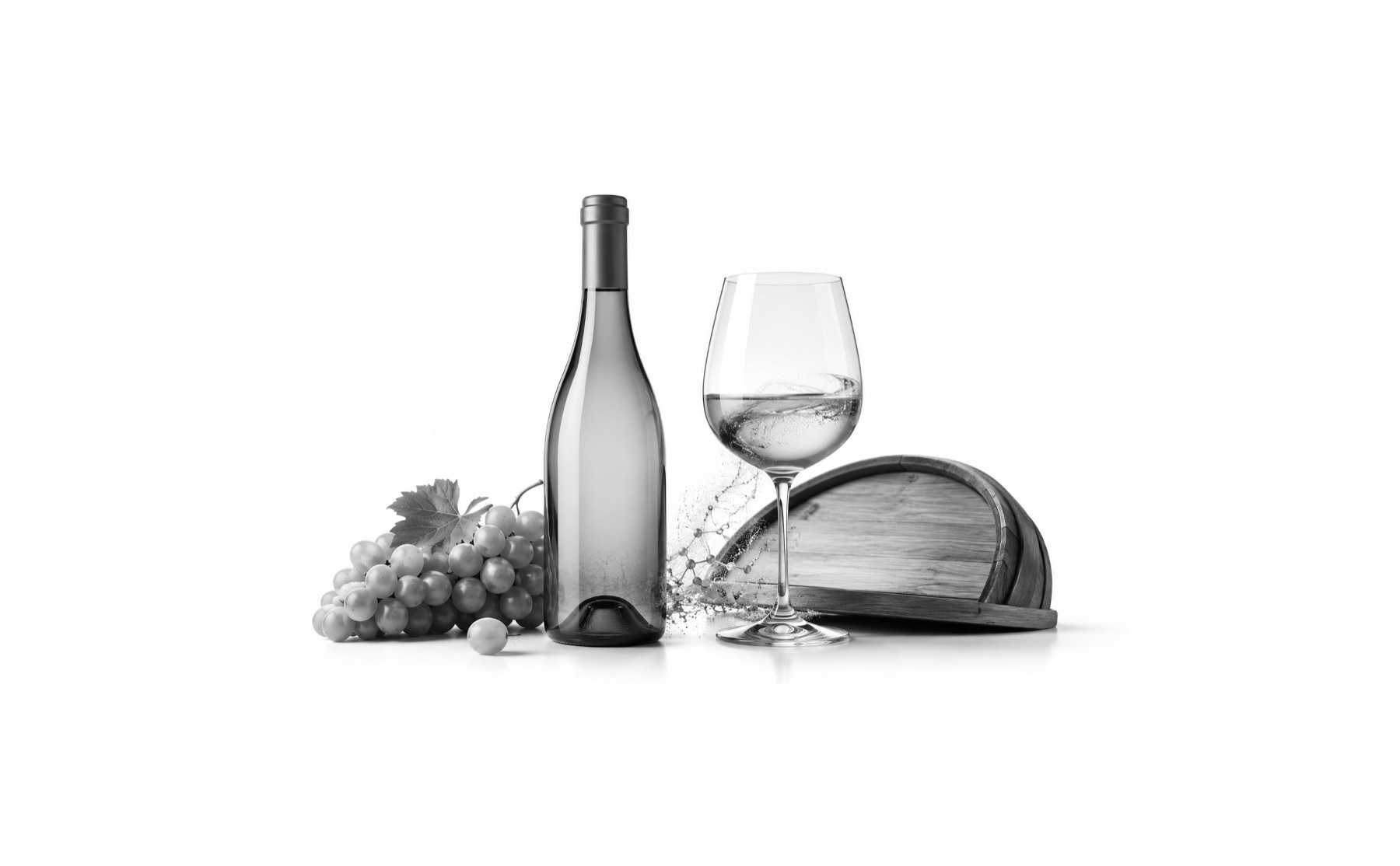
For generations, the longevity of white Burgundy has been discussed in the language of place: the slope, the limestone, the exposure, the hand of the grower, the mysterious equilibrium of a great Chardonnay grown in its rightful soil. Yet behind that cultural vocabulary lies a more exacting question. What, in practical and measurable terms, allows a white Burgundy to age with grace?
Since 2020, the Comité des vins de Bourgogne, working with Vinventions and a network of forty partner wineries, has been studying that question through the VOLTA project. Its purpose is not to replace the traditional understanding of Burgundy with laboratory certainty, but to clarify the oenological conditions that support one of the region’s most valued qualities: the capacity of its white wines to develop complexity over time without falling prematurely into oxidation.
The latest findings, presented in June 2026, point to several decisive factors. Ageing on lees appears to strengthen resistance to oxidation. Longer élevage, particularly beyond nine months, is associated with greater oxidative stability. The use of new oak, especially in small vessels such as barrels, can also contribute positively when the toast is light rather than heavy. Together, these findings refine the conversation around white Burgundy longevity, linking cellar decisions to the future aromatic life of the wine.
What Longevity Means in White Burgundy
The longevity of white Burgundy is not merely a matter of surviving time in bottle. A wine may remain intact yet fail to deepen. True longevity implies the ability to develop a desirable ageing bouquet while retaining harmony, precision and identity.
In Chardonnay from Burgundy, positive evolution is often associated with aromas of hazelnut, citrus peel, grapefruit, pear and other white-fleshed fruits. These notes suggest controlled transformation rather than decline. By contrast, premature or undesirable oxidation can lead to aromas of honey, walnut, faded floral notes, bruised apple or even boiled potato. The distinction is crucial. Ageing is not the same as oxidation, although oxidation is always one of the forces with which an ageing white wine must contend.
This is why the VOLTA project is particularly significant. It examines longevity not as a romantic abstraction, but as a measurable interaction between grape-derived compounds, winemaking choices, oxygen exposure, sulphur dioxide dynamics, closure performance and the intrinsic composition of the wine.
Polyphenols and Oxidation: A Delicate Balance
A central element of the research concerns polyphenols, compounds involved in oxidation mechanisms and therefore in the ageing trajectory of wine. Using Polyscan, an analytical tool developed by Vinventions, the researchers assessed polyphenol concentrations and their relationship to oxidative resistance.
Across the 2020, 2021 and 2022 vintages, an important pattern emerged: wines that showed stronger resistance to oxidation at the end of alcoholic fermentation tended, on average, to have lower concentrations of grape-derived polyphenols. This does not mean that polyphenols are simply undesirable. Rather, it shows that their concentration, extraction and subsequent behaviour form part of a complex oxidative system.
Vintage conditions also matter. The 2020 vintage, shaped by warmth and water stress, tended to produce grapes richer in polyphenols. Such differences remind us that longevity begins before the cellar, in the physiology of the vine and the climatic signature of the year.
Yet in Burgundy, many producers do not systematically fine musts or separate free-run juice from press juice. As a result, several pre-fermentation practices may show measurable effects in early juice fractions without necessarily changing the profile of the full settling tank once all fractions are blended. Harvest method, crushing, destemming and press filling time can influence polyphenol concentration in runoff juice, but their broader effect may become less significant when the juice is not separated.
One practice does stand apart: sulphiting on grapes or in the press. When sulphur dioxide is added at these stages, higher polyphenol levels are observed in settling tanks, whether or not juice fractions are separated. This is consistent with the known role of sulphur dioxide in both encouraging extraction and limiting oxidation. By contrast, sulphur dioxide added later, in the settling tank, does not appear to have the same impact on polyphenol concentration.
For fine-wine collectors, this detail is more than technical. It suggests that oxidative stability is not determined by one intervention alone, but by the timing of decisions and by the chemical environment established before fermentation is complete.
Burgundy’s Particular Chardonnay Material
One of the more intriguing findings concerns pressing. Whatever the press type or programme, the researchers observed that in approximately sixty percent of cases, the juice emerged with relatively low polyphenol concentrations compared with Chardonnay from other regions of the world.
This matters because it reinforces the idea that Burgundy’s ageing potential is built on particular raw material. The region’s Chardonnay does not merely acquire its identity through oak, lees or bottle age. Its initial phenolic profile may already provide a distinctive foundation for longevity.
Such a conclusion should be handled carefully. It does not imply that Burgundy is naturally immune to oxidation, nor that all white Burgundy is destined for long life. It does, however, suggest that the region’s wines often begin from a favourable compositional base, one that can be preserved, strengthened or compromised by subsequent cellar choices.
The Role of Élevage: Time, Vessel and Lees
The most consequential findings from the VOLTA project concern élevage. Across six vintages from 2020 to 2025, the researchers observed that longevity tends to increase with the duration of ageing. From around nine months onward, a growing proportion of wines show stronger resistance to oxidation.
This has important implications for a region where decisions about élevage length are deeply tied to appellation, domaine style, market rhythm and vintage conditions. A shorter ageing period may preserve primary fruit and accelerate release, but it may not always provide the same structural preparation for bottle development.
The type of élevage also matters. Wines aged in new wood and in small-volume vessels, particularly barrels, showed greater resistance to oxidation when the oak toast was light. This finding aligns with a nuanced understanding of oak’s role in white Burgundy. The barrel is not merely an aromatic tool. It is also a micro-oxygenation environment, a site of slow exchange and gradual integration. When the toast is light, it may support stability without imposing excessive aromatic weight.
Most striking, however, is the positive role of lees ageing. Wines raised on lees showed especially strong resistance to oxidation. Lees can influence wine texture, redox balance, aromatic development and the consumption of oxygen. In the context of Burgundy, where lees ageing has long been part of the grammar of serious white wine, the VOLTA findings provide analytical support for a practice often understood through experience.
The lesson is not that every white Burgundy should be aged longer, in new oak, on abundant lees. The more refined conclusion is that longevity is favoured when élevage allows the wine to build resistance gradually, provided that the vessel, lees management and oxygen exposure remain coherent with the wine’s material.
Bottle Ageing and the Four Oxidation Profiles
To understand what happens after bottling, the VOLTA project followed around forty wines over several years. To remove closure variability as far as possible, all wines were bottled with the same Nomacorc Select Green 300 closure, chosen for its homogeneous permeability. At bottling, dissolved oxygen and headspace oxygen were measured. The wines were then monitored at six months, one year, two years and beyond, with both tastings and analytical measurements planned over a five-year period.
This approach allowed the researchers to classify wines into four categories: oxidation-sensitive, oxidation-sensitive with oak character, oxidation-resistant, and oxidation-resistant with oak character.
The distinction became particularly visible after three years. Wines in the two oxidation-sensitive groups began to show more advanced aromatic evolution, including notes associated with oxidative decline. At the start, free sulphur dioxide levels across the groups were broadly comparable, around 25 to 30 mg/l. Yet in the sensitive groups, free SO₂ dropped below 10 mg/l after three years, coinciding with a clear loss of protection. More importantly, the rate of free SO₂ consumption was much faster in the sensitive wines than in the resistant groups.
This suggests that longevity cannot be predicted simply by measuring sulphur dioxide at bottling. Two wines may begin with similar free SO₂ levels but consume that protection at different speeds. The decisive factor lies in the wine’s intrinsic composition: its phenolic profile, redox balance, élevage history and capacity to manage oxygen over time.
For collectors, this point is essential. A bottle’s ageing potential is not only a function of appellation hierarchy or producer reputation. It also depends on invisible chemical resilience, much of which is shaped before the cork is inserted.
A More Precise Future for White Burgundy
The VOLTA project arrives at a moment when the ageing of white Burgundy remains a subject of close attention among collectors, sommeliers and producers. The problem of premature oxidation has made the fine-wine world more alert to the fragility of great Chardonnay. Yet the most useful response is not anxiety, but knowledge.
These findings do not reduce Burgundy to a formula. They do not suggest that a single cellar practice can guarantee longevity. Instead, they show how several variables converge: relatively low grape-derived polyphenol concentrations, careful sulphur dioxide timing, longer élevage, appropriate barrel use, light toast, lees contact, controlled oxygen management and the wine’s own compositional capacity to preserve free SO₂ over time.
For the connoisseur, the implications are profound. White Burgundy’s ability to age is not a passive inheritance. It is constructed through a sequence of decisions, each one modest in isolation, but cumulative in effect. The greatness of a mature Meursault, Puligny-Montrachet or Chablis may still seem effortless in the glass, but that effortlessness is increasingly understood as the result of disciplined precision.
The quiet science of longevity does not diminish the poetry of Burgundy. It gives that poetry a structure. It helps explain why certain wines move from citrus and white fruit toward hazelnut, mineral depth and calm complexity, while others lose definition too soon. And it reminds us that in white Burgundy, time is not merely endured. When the wine has been properly prepared, time becomes part of its expression.