
Burgundy’s Vineyard Land Enters a New Financial Era
Burgundy's vineyard market reached unprecedented heights in 2025, with record-breaking Côte d'Or sales reshaping land values and raising questions about the future of winegrowing.
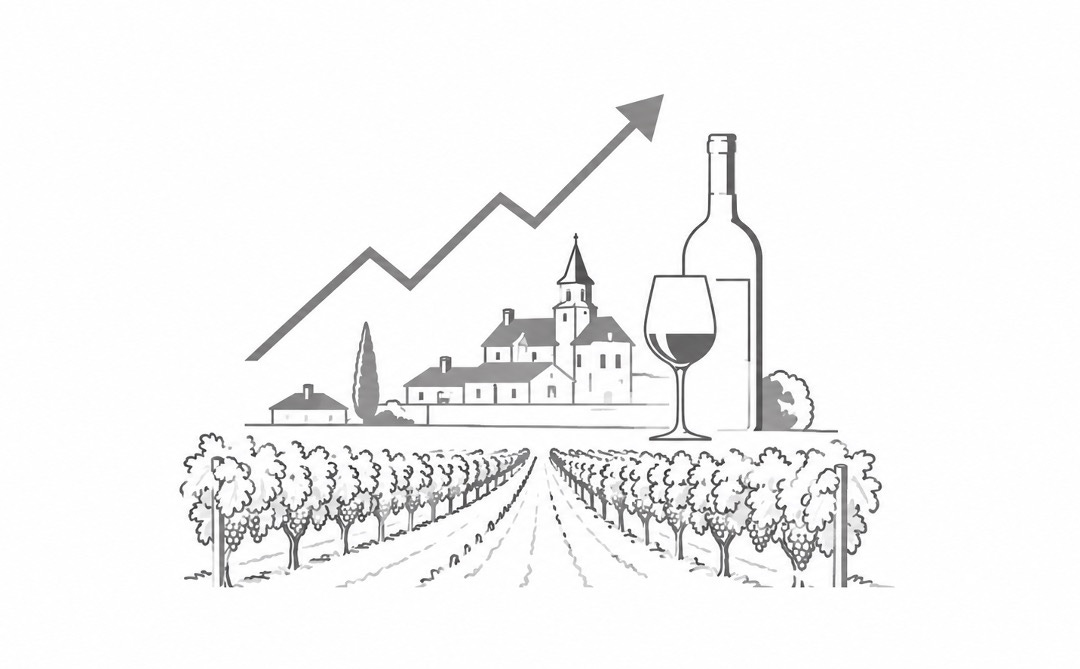
In Burgundy, vineyard land has long belonged to a category of its own. Even in a country where wine estates can command exceptional prices, the most coveted slopes of the Côte d’Or have stood apart: scarce, prestigious, almost impossible to replace. Yet in 2025 the market crossed a threshold that surprised even those accustomed to very large transactions.
The decisive signal was not simply that prices remained high. It was the scale of money moving through actual vineyard sales. According to the regional SAFER for Bourgogne–Franche-Comté, one physical vineyard transaction exceeded €300 million for less than ten hectares. That implied a value of roughly €30 million per hectare, a figure that changes the conversation around Burgundian land from expensive to extraordinary.
For Philippe de Segonzac, director of SAFER Bourgogne–Franche-Comté, Burgundy’s vines are very likely the most expensive in France. But even that statement requires nuance. The average sale price for one hectare of French AOP vineyard land fell slightly in 2025, reaching €171,400 per hectare, down 3% year on year. In the broader Burgundy–Beaujolais–Savoie–Jura area, however, the trend moved in the opposite direction: the average rose to €307,500 per hectare, an increase of 4%.
Those averages, however, conceal more than they reveal. A single exceptional sale was powerful enough to tilt the regional figures upward. The market for vines in the Côte d’Or, or in the Yonne, cannot be understood by looking only at a regional mean. In Burgundy, one transaction may alter the statistical landscape while representing a tiny quantity of land.
That is the paradox of the region’s vineyard economy: the land market is narrow, highly specialized, and unlike the rest of agricultural property. It does not reflect the ordinary value of farmland in Bourgogne–Franche-Comté. Yet because of the reputation attached to Burgundy’s greatest appellations, these vineyard sales influence the image, confidence, and economic momentum of the whole sector.
The Sale That Redrew the Map
The most striking deal of 2025 involved a sum above €300 million for fewer than ten hectares. The acquisition has been associated with FICOFI, the wine business linked to Deepak Rao, whose name refers to FIdelitas, COncordia and FIducia. The group has invested in some of Burgundy’s most celebrated crus, including names such as Bâtard-Montrachet, Bonnes-Mares, and Échezeaux.
A second major transaction reached around €50 million. Taken together, these deals marked a new stage for the physical vineyard market. Transactions of more than €100 million or even €200 million had already been observed in the market for company shares, where the assets being transferred can be harder to isolate. Such deals may include vines, buildings, inventories, brands, shareholder accounts, and other business components. But seeing this level of money attached to direct vineyard transactions is different. It makes the value of the land itself far more visible.
At the national level, the Fédération Nationale des SAFER had already noted that the four largest Côte d’Or cru transactions in 2025 represented €400 million, roughly one quarter of the turnover generated by all vineyard land exchanged in France that year. Burgundy’s top vineyard parcels are therefore no longer merely expensive within their own region. They are now capable of reshaping the financial picture of the entire French vineyard market.
A Market Almost Doubled by Prestige
The effect of the exceptional Côte d’Or sale becomes clear in the regional numbers. In 2025, the Burgundy-region vineyard market recorded 709 transactions, up 11% from the previous year. The area exchanged reached 680 hectares, an increase of 27%. In value, the market rose to €540 million, up 82%.
That total excludes share transactions and focuses on vineyard sales with or without buildings. Even within that framework, the single sale above €300 million accounted for 56% of the market’s total value. In other words, more than half of the regional vineyard market’s monetary weight came from one deal involving fewer than ten hectares.
This was not a one-year anomaly emerging from a quiet baseline. The market had already expanded sharply in 2024, rising from €142 million in 2023 to €290.5 million in 2024. By passing the €500 million mark in 2025, it came close to doubling again.
Such growth does not mean every vineyard owner in the region is seeing comparable values. The market is increasingly divided. At one end are parcels in the most prestigious appellations, where scarcity, reputation, and global demand support extraordinary prices. At the other are vineyards in areas where buyers are more hesitant, and where the wider difficulties affecting parts of the wine sector are felt more directly.
Across France, the contrast has become increasingly sharp. Many vineyard sales still take place at far more modest prices, and large parts of the national vineyard economy bear little resemblance to Côte d’Or figures. The Burgundy story is therefore not the story of all French wine land. It is the story of a small number of highly coveted terroirs whose symbolic and financial power is out of proportion to their physical size.
Burgundy Resists the Broader Wine Crisis
The wider French wine industry has not been spared pressure. Some regions, particularly Bordeaux, have faced serious difficulties, with falling demand, oversupply, and vineyard restructuring weighing on prices and morale. Burgundy, by contrast, has so far proved more resilient.
Bernard Lacour, president of SAFER Bourgogne–Franche-Comté, attributes this strength partly to the region’s highly segmented production model. Burgundy does not offer one homogeneous product to one uniform market. Its wines are organized by appellation, village, cru, producer reputation, parcel identity, and scarcity. Demand is similarly segmented. Buyers seeking an entry-level regional wine are not behaving like collectors chasing grand crus. Investors, merchants, wine lovers, and families looking to build estates all operate at different levels of the market.
That alignment between differentiated supply and differentiated demand helps pull the region upward. In this sense, Burgundy’s fragmentation is not a weakness. It is one of the mechanisms that sustains value.
The Jura is also described as performing well. Beaujolais presents a more mixed picture, with caution visible in certain crus and markets. Some buyers are pausing before committing capital. Yet, from SAFER’s point of view, there are not currently broad or surprising areas of severe weakness in the regional vineyard market.
The message is not that Burgundy is immune to risk. Rather, it has not yet experienced the same intensity of crisis seen elsewhere. Prestige, scarcity, and market segmentation continue to protect the region, at least for now.
The Human Question Behind the Financial Records
The most urgent issue is no longer only valuation. It is whether a vineyard economy built on such prices can still renew itself.
If land values keep rising, how can younger growers enter the profession? How can family-sized estates survive when a few hectares may be worth tens or hundreds of millions of euros? How can the region preserve the working character of its vineyards instead of turning them into financial trophies?
Philippe de Segonzac points to gradual installation as one answer. In the most prestigious appellations, new entrants do not necessarily acquire large holdings at once. They may build an estate piece by piece, buying small parcels over time, including in the Côte d’Or. SAFER continues to support installations not only in the Côte d’Or but also in the Jura, Saône-et-Loire, Yonne, Nièvre, and other vineyard areas.
Still, the challenge is structural. The higher the price of land, the more difficult it becomes to maintain a model based on active growers who are personally involved in running their farms. Bernard Lacour emphasizes the need to mobilize both the agricultural profession and the legal tools available to protect human-scale holdings.
That phrase—human scale—is central. Burgundy’s reputation has not been built solely on famous names or rare climats. It also rests on a model of estates where the people responsible for production remain closely connected to the land. This is part of what makes the region admired. It is also what many in the sector want to preserve.
The record-breaking transactions of 2025 therefore tell two stories at once. The first is a story of global prestige, capital, scarcity, and the financial power of Burgundy’s greatest crus. The second is quieter but just as important: the need to ensure that the next generation can still enter the vineyards, cultivate them, and keep Burgundy from becoming a market of assets detached from the people who work the land.
The Côte d’Or has entered a new price universe. The question now is whether Burgundy can absorb that success without losing the model that made its vineyards so valuable in the first place.