

Burgundy’s Density Debate Enters a New Era
Meursault, Mâcon and beyond reconsider vine density as climate adaptation reshapes Burgundy’s vineyard model
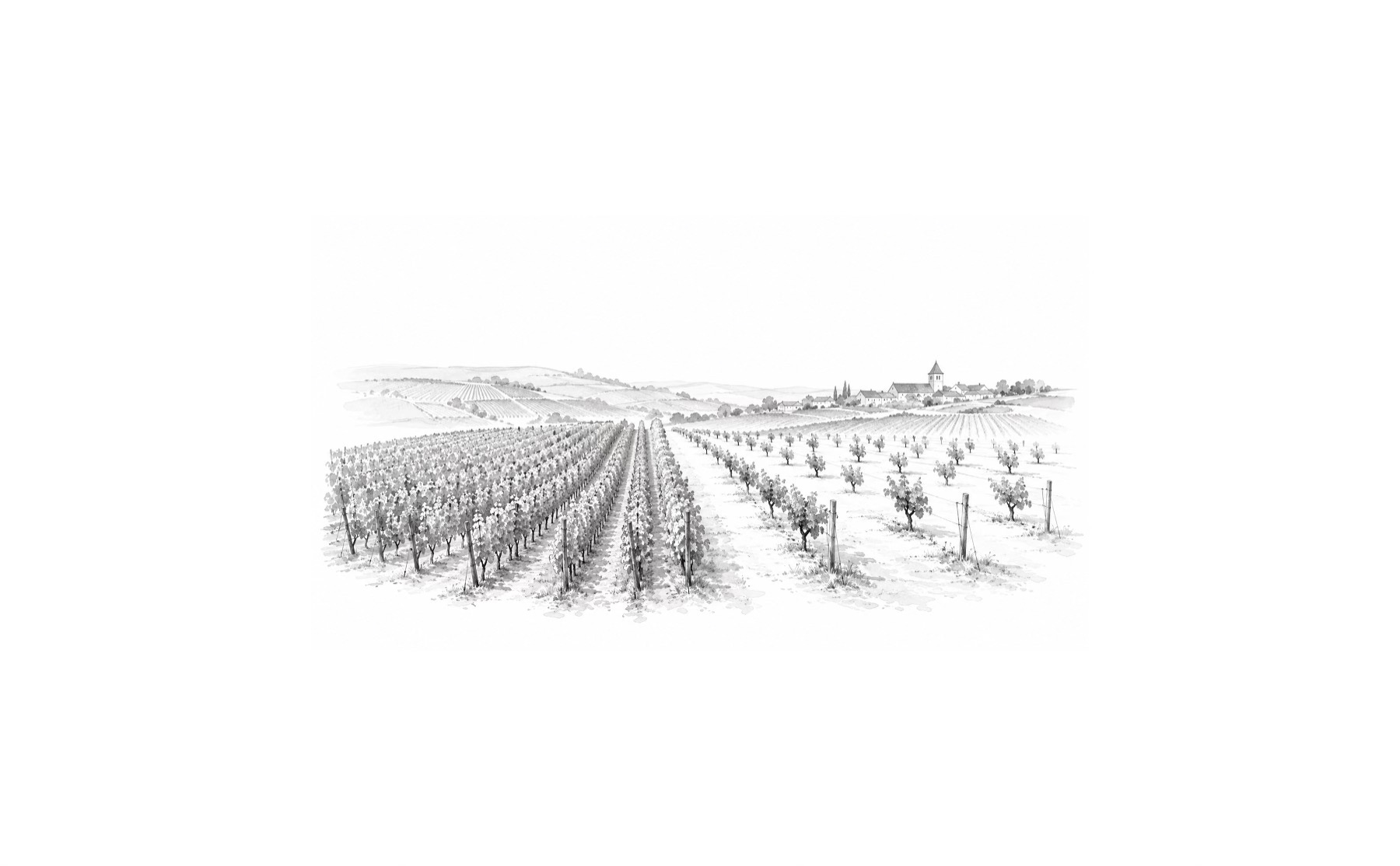
For generations, vineyard density has been one of the defining characteristics of Burgundy’s viticultural identity. Narrow rows, closely spaced vines, and planting densities often exceeding 10,000 vines per hectare have long been associated with quality, terroir expression, and the region’s cultural heritage. Yet in 2026, one of Burgundy’s most deeply rooted assumptions is undergoing renewed scrutiny.
The recent authorization allowing Meursault growers to plant vineyards at 5,000 vines per hectare on an experimental basis marks a significant development in a debate that has been quietly evolving for more than a decade. At the same time, the Mâconnais appears poised to secure a permanent reduction in minimum planting density. Elsewhere, discussions are gathering momentum in the Côte Chalonnaise and Épineuil.
The question is no longer whether lower-density vineyards belong in Burgundy. The question is how far the region is prepared to integrate them into its future.
The Historical Importance of High-Density Planting
Few wine regions are as closely associated with high-density viticulture as Burgundy. The traditional model emerged over centuries as growers sought to maximize competition between vines, naturally limit vigor, and encourage deep root systems capable of reflecting subtle geological differences.
In many parts of the Côte d’Or, dense planting became inseparable from the notion of terroir itself. Closely spaced vines were viewed not merely as a technical choice but as an essential component of producing wines of distinction.
This philosophy gradually became embedded within appellation regulations. As a result, Burgundy developed one of the strictest density frameworks in the world, with many appellations requiring planting levels far above those commonly found in other leading wine regions.
For decades, the relationship appeared straightforward: higher density was considered synonymous with higher quality.
Climate Change Challenges Traditional Assumptions
The succession of exceptionally warm and dry vintages since 2018 has altered the discussion.
Across Burgundy, growers have increasingly confronted issues linked to water stress, vine decline, and reduced resilience during prolonged heatwaves. Under such conditions, dense vineyards create intense competition for limited water resources.
Lower-density plantings offer a different model. With greater spacing between vines, individual plants have access to a larger volume of soil and potentially improved water availability. Advocates argue that this can enhance vineyard resilience without necessarily compromising quality.
The argument reflects a broader shift occurring throughout European viticulture. Climate adaptation has become a central concern, prompting growers to re-evaluate long-established practices once regarded as untouchable.
In Burgundy, where tradition carries exceptional weight, even modest regulatory changes represent a significant cultural evolution.
Meursault Opens the Door
The authorization granted to Meursault through the Institut National de l’Origine et de la Qualité’s innovation evaluation framework represents one of the most closely watched experiments in the region.
The village appellation occupies a symbolic position within Burgundy. Meursault is internationally recognized for some of the world’s most celebrated Chardonnay-based wines, making any regulatory innovation particularly noteworthy.
The trial does not signal an abandonment of traditional planting densities. Rather, it creates an opportunity to evaluate whether lower-density vineyards can provide a viable adaptation strategy under increasingly challenging climatic conditions.
Importantly, the initiative reflects a pragmatic approach. Producers are seeking evidence rather than ideology, testing whether alternative vineyard architectures can preserve both vine health and wine quality over the long term.
Mâcon’s Long Road to Reform
The Mâconnais offers a different perspective on the same issue.
Growers in the region have sought authorization for lower planting densities for many years. Earlier requests encountered resistance, largely because density requirements were viewed as integral to Burgundy’s hierarchical structure of appellations.
That position has gradually softened as scientific understanding and climatic realities have evolved.
For producers in southern Burgundy, the anticipated reduction from 7,000 to 5,000 vines per hectare represents more than a regulatory adjustment. It reflects growing recognition that vineyard management practices must adapt to local conditions rather than conform exclusively to historical precedent.
The development also highlights a broader trend within French appellation systems: a willingness to reconsider inherited rules when environmental circumstances change.
The Emerging Debate in the Bourgognes Identifiés
Attention is now turning toward Burgundy’s so-called Bourgognes identifiés, the geographically defined sectors within the regional Bourgogne appellation.
Among these, Bourgogne Côte Chalonnaise and Bourgogne Épineuil are expected to pursue similar requests. Discussions within grower organizations reveal a nuanced debate that extends beyond simple questions of productivity.
Supporters frequently emphasize flexibility rather than conversion. Many growers have no immediate intention of planting lower-density vineyards themselves. Instead, they argue for allowing producers to choose the model best suited to their economic circumstances, vineyard sites, and long-term adaptation strategies.
This distinction is crucial.
The current conversation is less about replacing Burgundy’s traditional system and more about expanding the range of permitted solutions.
Why Adoption Remains Limited
Despite the regulatory openings already available, lower-density vineyards remain relatively uncommon throughout Burgundy.
One practical obstacle is operational complexity.
A producer managing multiple appellations often works under different regulatory frameworks. Introducing a new density model can require specialized machinery, modified vineyard practices, and adjustments to labor organization. For estates operating across several appellations, maintaining multiple systems simultaneously can create significant logistical challenges.
This reality explains why regulatory reform does not automatically translate into widespread adoption.
Even where lower densities are authorized, many growers continue to favor established practices because their equipment, workforce, and vineyard infrastructure were designed around traditional planting models.
The Hautes-Côtes Exception
The most revealing case study may be found in the Hautes-Côtes de Beaune and Hautes-Côtes de Nuits.
These regional appellations have long benefited from a unique exception allowing substantially lower planting densities than most of Burgundy. Over decades, growers adapted their equipment, viticultural techniques, and economic models accordingly.
Today, a substantial portion of vineyard area in these zones lies below the 5,000-vine threshold currently generating debate elsewhere in Burgundy.
Their experience demonstrates that lower-density viticulture can coexist successfully within the broader Burgundian landscape. It also illustrates an important lesson: once a vineyard system becomes established, growers are often reluctant to reverse course.
The conversation is therefore no longer theoretical. Burgundy already possesses decades of practical experience with alternative density models.
The Future: Diversity Rather Than Uniformity
The emerging density debate reveals a broader transformation underway in Burgundy.
For much of the twentieth century, vineyard regulations sought harmonization around a shared understanding of quality. Today, climate variability, economic pressures, and evolving agronomic knowledge are encouraging a more flexible approach.
The future of Burgundy is unlikely to be defined by a single planting density.
Instead, the region may gradually embrace a more diverse viticultural landscape in which traditional high-density vineyards coexist alongside carefully considered lower-density plantings adapted to specific sites and climatic realities.
Such an outcome would not represent a break with Burgundy’s history. Rather, it would continue a longstanding tradition of adaptation, one that has allowed the region’s vineyards to evolve through centuries of environmental, economic, and cultural change.
The debate surrounding planting density is therefore about far more than vineyard spacing. It is ultimately a conversation about how Burgundy intends to preserve its identity while preparing for the challenges of the decades ahead.