
The Bordeaux 2009 Vintage: Generosity with a Long Future
The 2009 Bordeaux vintage still fascinates collectors, drinkers and lovers of age-worthy French wine.
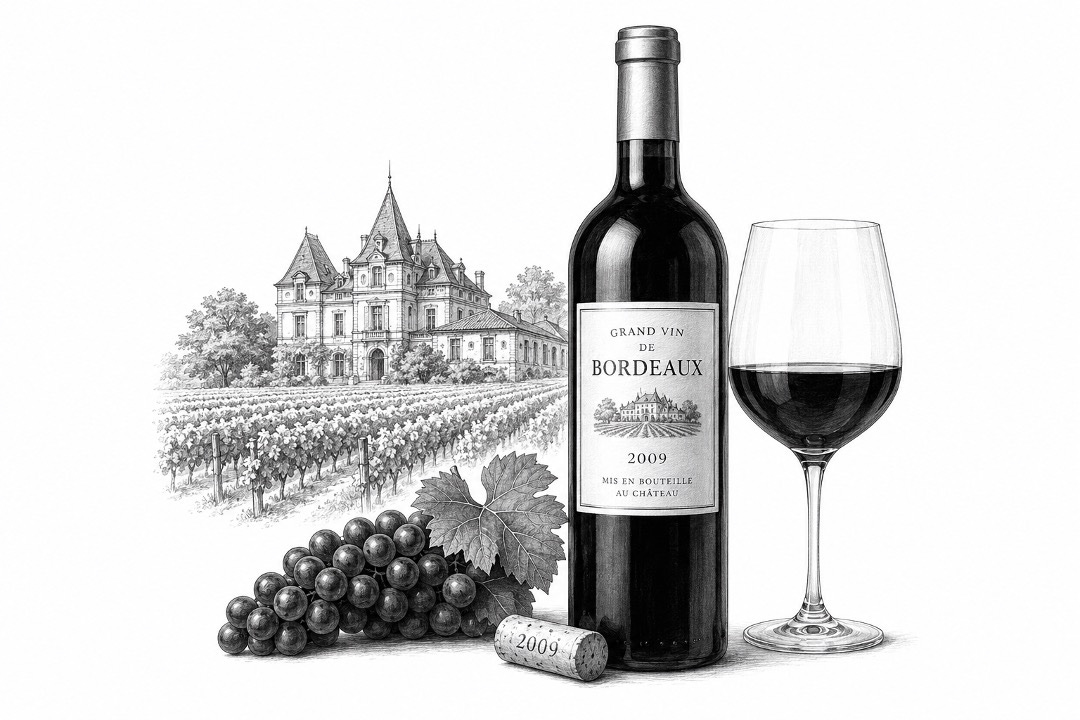
The Bordeaux 2009 vintage occupies a particular place in the modern history of French wine. It is neither an austere classic demanding decades of silence, nor a simple warm-year vintage built only on charm. Its appeal lies in the rare combination of richness, polish and longevity: wines that can already give pleasure, yet remain far from the end of their evolution.
For many serious Bordeaux lovers, 2009 has become one of the defining vintages of the early twenty-first century. It arrived at a moment when the region was changing: warmer growing seasons were becoming more visible, global demand for classified growths was intense, and the style of Bordeaux itself was under discussion. Yet the best wines of 2009 do not feel like caricatures of ripeness. At their finest, they offer depth without heaviness, structure without hardness, and fruit that is abundant but not blurred.
This is why the vintage continues to provoke interest. It speaks fluently to drinkers who value immediate sensory pleasure, but it also rewards those who think in decades.
Why the Bordeaux 2009 Vintage Still Feels Young
More than fifteen years after harvest, many leading 2009 Bordeaux wines remain strikingly fresh in their development. Their surfaces may be beginning to soften, but the core is still vigorous. The tannins, though plentiful, are generally supple rather than abrasive. The fruit often retains a dark, ripe, almost luminous quality, supported by enough acidity to keep the wines articulate.
The comparison sometimes made with 1982 is understandable, though 2009 belongs to a different age. Both vintages have a natural generosity and an ease of expression that can make them unusually approachable. But 2009 is shaped by a more modern context: riper fruit, more careful vineyard work, stricter selection and a warmer climatic background.
The result is a Bordeaux vintage that can seem open-hearted without being simple. The best bottles are not merely charming; they have architectural strength beneath the velvet.
The Growing Season Behind the Bordeaux 2009 Vintage
The character of 2009 begins with the conditions of the year. A cool, wet winter helped restore water reserves and encouraged proper vine dormancy. Spring did not bring damaging frost to the leading vineyards, and flowering was relatively early and efficient, setting the stage for a healthy crop.
The essential feature of the season was balance within warmth. Bordeaux enjoyed generous sunshine and significant heat, but the vines were not pushed into the kind of severe stress that can halt ripening or produce dried flavours. Rainfall during the summer was sufficient to keep the vines functioning, while fine weather in the crucial late-season period allowed both Merlot and Cabernet Sauvignon to reach full maturity.
September rain required patience, particularly for Merlot. Estates that waited, rather than picking too quickly, were rewarded with fruit of impressive ripeness. Cabernet Sauvignon, especially on the Left Bank, benefited from extended hang time into October. Alcohol levels were often high by Bordeaux standards, particularly on the Right Bank, but in the best wines this is absorbed by fruit, tannin and freshness.
The most successful 2009s therefore do not taste hot in the glass. They taste ripe, complete and expansive.
Left Bank Power, Right Bank Opulence
The 2009 Bordeaux vintage was not confined to one side of the Gironde. Both the Left Bank and Right Bank produced memorable wines, though their personalities differ.
On the Left Bank, Cabernet Sauvignon gave many wines impressive line and persistence. Pauillac, Saint-Julien, Saint-Estèphe and Margaux all produced bottles with serious ageing potential. The leading examples combine cassis-like depth, firm but refined tannins and the kind of savoury complexity that should become more apparent with time.
Saint-Julien in particular often shines in warm years because its natural poise can temper generosity. Pauillac brought muscle and scale, while Margaux, at its best, added perfume and finesse. Some estates beyond the most famous names also performed very well, offering a reminder that 2009 was not solely a vintage for trophy labels.
On the Right Bank, Merlot reached notable ripeness, giving many Saint-Émilion and Pomerol wines plush texture and considerable aromatic breadth. The challenge here was proportion. Where picking dates and extraction were handled with restraint, the wines can be magnificent: broad, layered and enveloping, yet still coherent. Where ambition outweighed precision, the results may feel more marked by alcohol or density.
Drinking the Bordeaux 2009 Vintage Today
For those with bottles in the cellar, the question is no longer whether 2009 has promise. It clearly does. The more interesting question is when to begin.
Many 2009 Bordeaux wines are now entering a rewarding early drinking window. Less concentrated wines, second wines and well-chosen bottles from more modest appellations may already be highly enjoyable. They can offer the pleasure of ripe fruit, softened tannins and the first signs of tertiary development without requiring heroic patience.
The greatest wines, however, remain young. Classified growths from top-performing châteaux, especially those with strong Cabernet foundations, should continue to evolve for many years. Their present charm should not be mistaken for full maturity. Behind the generosity, there is still significant structure.
A sensible approach is to open selectively. If you own several bottles, try one now with proper decanting and a thoughtful meal. If you own only a single bottle from a major château, patience may still be the wiser form of pleasure.
The Market Context: A Vintage Worth Revisiting
When the 2009 Bordeaux vintage was first offered, enthusiasm for top Bordeaux was exceptionally strong. Demand from international buyers, including Asia, helped push release prices to ambitious levels. At the time, many wines seemed expensive even by the standards of great Bordeaux.
The market has since changed. Bordeaux no longer commands the same uncomplicated excitement it enjoyed during that period, and the wider fine wine market has become more selective. As a result, some 2009s have not appreciated as dramatically as once expected. In certain cases, current prices may look more reasonable than their early reputation would suggest.
This does not mean every bottle is a bargain. Condition, provenance, château reputation and storage history remain essential. But for collectors who want a vintage that combines stature with drinkability, 2009 deserves renewed attention. It offers a compelling alternative to younger vintages that may need longer in bottle, and to older vintages where perfect provenance becomes harder to secure.
What Makes 2009 Bordeaux So Appealing?
The enduring appeal of the Bordeaux 2009 vintage lies in its lack of severity. Great Bordeaux is often admired for restraint, but 2009 reminds us that seriousness and sensuality are not opposites. These wines can be intellectually satisfying without withholding pleasure.
They also reveal how Bordeaux responds when the season is generous but not destructive. The fruit is ripe, sometimes lavish, yet the best wines retain shape. The tannins are abundant, but generally polished. The acidity is present enough to define the wine, not so prominent that it dominates. This is the delicate equation behind the vintage’s reputation.
For lovers of French wine, 2009 is a vintage to study as well as to enjoy. It sits between eras: classical in its reliance on terroir and hierarchy, modern in its ripeness and texture. It is a reminder that Bordeaux does not move in a straight line from austerity to excess. In its finest years, it finds equilibrium in unexpected places.
Final Thought
The Bordeaux 2009 vintage is no longer a young promise, but neither is it a fully mature legend. Its finest wines are still unfolding, while many others are beginning to offer generous and deeply satisfying drinking. That dual nature is precisely what makes the vintage so attractive today.
For collectors, it remains a vintage of consequence. For drinkers, it offers pleasure without apology. And for anyone seeking to understand modern Bordeaux, 2009 is essential: warm, polished, ambitious and still very much alive.