
Baghera’s Anniversary Auction and the Gravity of Burgundy
Baghera’s anniversary auction shows Burgundy’s enduring pull, where provenance, rarity and history drive collector desire
On 10 May 2026, Geneva once again became one of the quiet capitals of the fine-wine market. Baghera/wines, the Swiss auction house founded around the upper reaches of collectible wine, marked its tenth anniversary with two sales that together approached CHF 2 million, close to €2 million at current parity. The day brought together more than 480 lots and over a thousand bottles, ranging from mature Bordeaux and Champagne to the Burgundian names that continue to define the psychology of the market.
The result was not simply a birthday performance. It offered a precise snapshot of where the rare-wine auction world now stands: provenance has become central, Burgundy remains the most emotionally charged region for collectors, and charitable sales, when handled with seriousness, can sit naturally beside the most exacting forms of connoisseurship.
Burgundy Still Sets the Auction Pulse
The leading lots confirmed a familiar truth. In the upper tiers of the secondary market, Burgundy does not merely compete; it often dictates the tempo. Domaine de la Romanée-Conti, and especially the grands crus of the Côte de Nuits, remain the reference point by which scarcity, desirability and collector confidence are measured.
Among the notable results, a 15-bottle lot from Domaine de la Romanée-Conti’s 2010 vintage approached €60,000, while another from the 2015 vintage followed at just under €56,000. These figures are not surprising in isolation, but they are revealing in context. The two vintages speak to different collector instincts: 2010 for its classical tension and precision; 2015 for its amplitude, generosity and immediate aura of greatness.
For French wine connoisseurs, the lesson is less about price than about hierarchy. The market continues to reward wines that combine limited production, a coherent estate mythology and a long record of performance in the glass. Romanée-Conti occupies this space with unusual force. It is not only collected as wine, but as a form of cultural capital.
La Romanée 1865: History as a Market Force
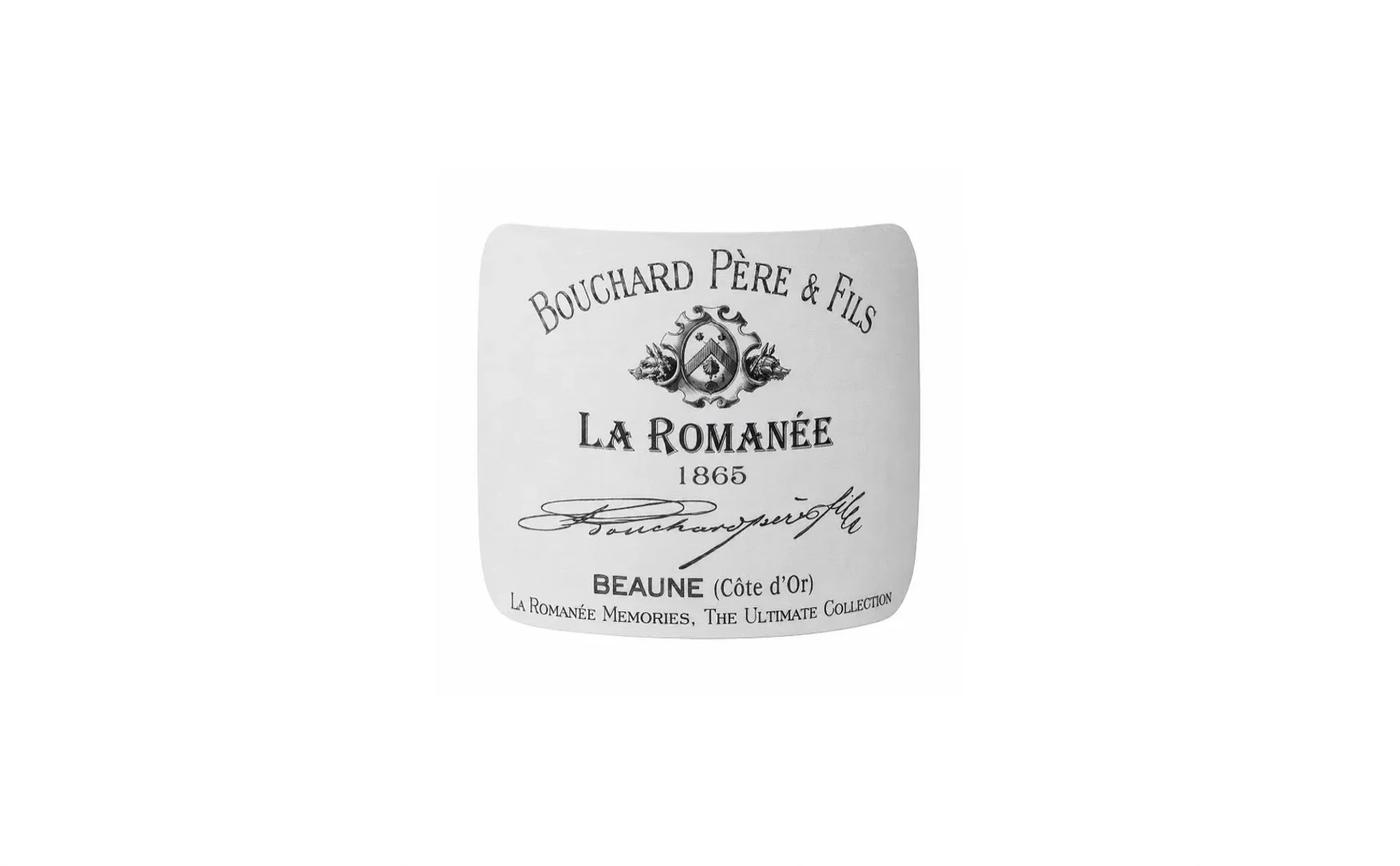
The most arresting result came from an older and rarer Burgundy: a single bottle of La Romanée 1865 from Domaine Bouchard Père & Fils, sold for CHF 122,000. Baghera’s own lot information notes that the bottle had been kept in Bouchard’s historic cellars, tasted, noted and recorked in 2020, with provenance linked to the La Romanée Memories sale.
Such a bottle belongs to a different category from even the most coveted modern grands crus. It is no longer judged only by anticipated drinking pleasure. It carries the weight of survival: phylloxera, war, changing cellars, changing owners, and the long fragility of glass, cork and label. At this level, provenance is not a detail; it is the object itself.
The 1865 La Romanée also underlines a broader shift in fine-wine collecting. The market is increasingly sophisticated about condition, storage and traceability. A great name alone is no longer enough. The most serious buyers want a story that can be verified, not merely admired.
Charity Without Sentimentality
The anniversary sales also carried a charitable dimension through the association 12 de Cœur, founded by leading figures from across French wine. Its role was to gather bottles donated by estates for sale in support of Les Restos du Cœur and the Swiss foundation Reload, which raises awareness around organ donation. Baghera’s “Heartbeat” sale was designed around direct estate provenance and charity, with 100% of profits allocated to the two causes.
This matters because charity auctions in wine can sometimes be treated as emotional exceptions to the market. Here, the opposite seems true. The charitable structure reinforced two values already central to serious collecting: trust and origin. Lots from names such as Petrus, Château d’Yquem and Louis Roederer were not decorative gestures. They were part of a carefully assembled sale in which generosity and provenance supported one another.
The charitable component raised CHF 622,300 for the two organisations, a substantial figure that shows how fine wine, when placed in the right institutional setting, can still mobilise capital beyond private acquisition.
The Enduring Power of Provenance
Baghera/wines has built much of its reputation on provenance-led sales. Its 2018 auction of wines from Henri Jayer’s personal cellar remains a defining moment in the modern wine-auction landscape. The house has since continued to position itself around a particular kind of collector: one drawn less to volume than to origin, rarity and narrative coherence.
That positioning feels especially relevant in 2026. The fine-wine market has become more selective after years of extraordinary price growth. Buyers are less willing to chase everything indiscriminately. They scrutinise storage histories, estate releases, recorking records and prior auction appearances. In this climate, the most convincing bottles are not always the most famous; they are the ones with the fewest unanswered questions.
The Baghera anniversary sales therefore speak to a market that is maturing. Speculative excitement has not disappeared, but it is increasingly filtered through discipline. The best lots are expected to satisfy both desire and due diligence.
What This Sale Reveals About Fine Wine in 2026
Three conclusions emerge from the Geneva results.
First, Burgundy remains the most powerful engine of fine-wine desire. Bordeaux, Champagne and Sauternes retain immense prestige, but the emotional premium attached to Burgundy’s scarcity is still unequalled.
Second, historical bottles are becoming cultural artefacts as much as consumable luxuries. A bottle such as La Romanée 1865 is valued not only for what it may contain, but for what it has endured.
Third, charitable wine auctions can achieve seriousness when they are anchored in provenance rather than spectacle. The 12 de Cœur component worked because it aligned generosity with the standards collectors already respect.
The deeper point is that the fine-wine market remains, at its summit, a market of confidence. Confidence in the estate. Confidence in the cellar. Confidence in the intermediary. Confidence in the continuity between bottle and history.