
Angel Castel: Castel’s Calculated Entry into Champagne
Castel enters Champagne with Angel Castel, blending Malard expertise and a clear premium-accessible positioning.
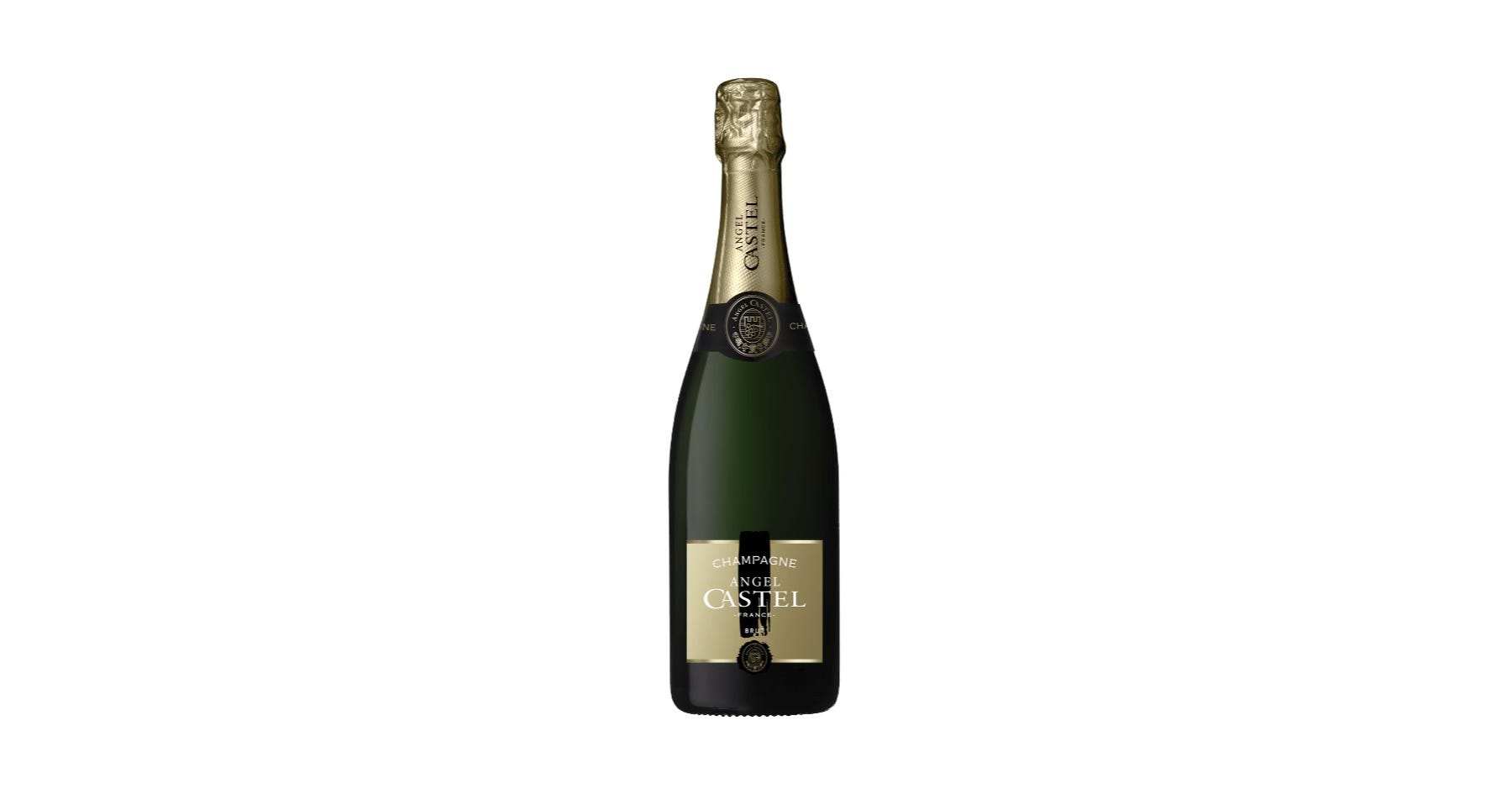
In the quiet hierarchy of French wine, Champagne remains both pinnacle and proving ground. It is therefore notable—though not entirely surprising—that Groupe Castel, long established across still and sparkling wines, has chosen this moment to introduce its first proprietary Champagne label: Angel Castel.
The move follows the group’s acquisition of Champagne Malard in 2024, a decision that now reveals its strategic coherence. Rather than merely expanding distribution, Castel appears intent on building a durable presence within the appellation itself—one grounded in production, identity, and stylistic clarity.
A Champagne Built on Structure Rather Than Spectacle
Angel Castel is not conceived as a prestige statement, nor as a volume-driven label. Its positioning—premium, yet deliberately accessible—places it within a nuanced segment of the non-vintage Brut category, where consistency and recognizability matter as much as aspiration.
The composition of the cuvée reflects this intent. A blend led by Chardonnay (40%), supported equally by Pinot Noir and Pinot Meunier (30% each), it draws primarily on the 2020 vintage, complemented by 40% reserve wines. Ageing on lees extends beyond 36 months, lending the wine a structural backbone that avoids immediacy without tipping into austerity.
Dosage is held at 8 g/l, a level that preserves tension while allowing for a rounded, approachable expression. The result is a Champagne designed not for intellectual decoding, but for clarity of experience: freshness at the outset, followed by a gradual unfolding of aromatic detail.
The Malard Foundation
The importance of Champagne Malard cannot be overstated in this context. By anchoring the new label in an existing house with established sourcing and technical expertise, Groupe Castel avoids the pitfalls of superficial brand creation.
Instead, Angel Castel benefits from a continuity of viticultural relationships and cellar practices. The wines are not assembled in abstraction, but emerge from a system already embedded in the rhythms of Champagne production—harvest cycles, reserve management, and extended ageing.
This approach suggests a longer horizon. The preparation of the 2025 base wines, already underway, indicates that Castel is thinking in generational rather than opportunistic terms.
Identity in a Crowded Landscape
Champagne’s non-vintage Brut category is among the most competitive in the world of wine. Recognition depends not only on quality, but on the ability to articulate a distinct identity without alienating the drinker.
Angel Castel’s answer lies in controlled differentiation. Its sensory profile emphasizes precision and freshness, while its structure allows for evolution in the glass. It avoids both the reductive minimalism of certain grower styles and the overt richness sometimes associated with larger houses.
The ambition, it seems, is to offer a Champagne that is immediately legible, yet not simplistic—a balance that remains difficult to achieve.
Between Heritage and Modernity
The aesthetic dimension of the launch is equally deliberate. The bottle design, marked by a central exclamation point, introduces a visual signature that departs subtly from established Champagne codes without abandoning them entirely.
This interplay between continuity and distinction extends to the brand’s narrative. Named after Angel Castel, a foundational figure in the family’s history, the cuvée gestures toward heritage while positioning itself within a contemporary, international context.
Such duality is not incidental. In Champagne, legitimacy is rarely declared; it is constructed through time, coherence, and restraint.
A Long-Term Proposition
Angel Castel enters the market with a relatively modest initial production—tens of thousands of bottles—distributed through selective channels including specialist retailers, gastronomy, and export markets. This measured rollout aligns with its broader strategy: to establish presence before pursuing scale.
Future developments are already anticipated, from format variations to potential extensions of the range. Yet the immediate challenge lies elsewhere: to secure a place within the mental landscape of Champagne drinkers, where familiarity often outweighs novelty.
For Groupe Castel, the launch of Angel Castel is less a declaration than a beginning. In Champagne, endurance defines success. The real measure will not be the debut, but the ability to sustain identity across vintages—quietly, consistently, and without compromise.