
Amphorae in French Wine – Oenological Innovation or Marketing Ploy?
France’s finest cellars revive ancient amphorae—does clay aging truly enhance wine, or is it a romantic echo of the past?
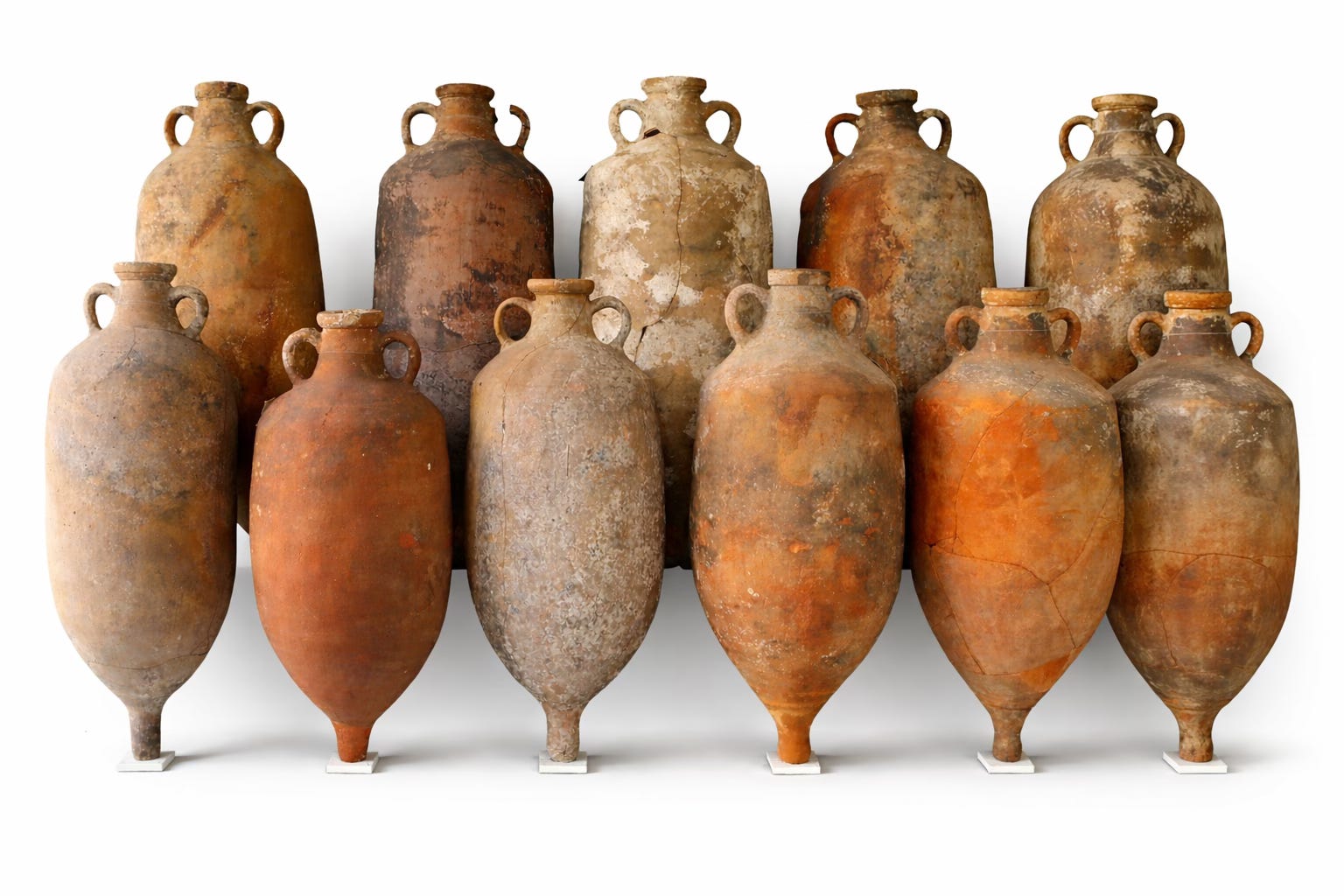
Amphorae from Antiquity to Abandonment
Wine and clay amphorae share a bond reaching back to antiquity. In the ancient Mediterranean world, amphorae – large terracotta jars – were the default containers for fermenting, storing, and transporting wine. The Romans famously shipped wine in amphorae across their empire, and early winemaking in Gaul (modern-day France) likely saw extensive amphora use under Roman influence. Yet this millennia-old tradition waned as a new technology emerged: the wooden barrel. The Celtic tribes of Gaul (the Gauls) pioneered wooden wine barrels around the 3rd to 1st century BCE. The Romans, impressed by barrels’ durability and stackability, gradually adopted them. By the late Roman Empire (around the 3rd century CE), oak barrels had largely replaced amphorae in western Europe. Barrels were sturdier and easier to handle than fragile clay, and over time they revealed an added benefit: oak imparts subtle flavors and tannins to wine, something amphorae never did. Thus, for centuries of French winemaking history – essentially from the early medieval period through the 20th century – amphorae were virtually absent. Winemakers came to prize the barrique (the classic 225L Bordeaux barrel) and its variants in every French region, not only as practical vessels but as tools for elevage (aging) that could shape a wine’s character through micro-oxidation and wood influence. Amphorae, by contrast, survived only in archaeological sites and museum displays, symbols of a bygone era of vinification.
However, the ancient art of clay winemaking never completely died everywhere. In Georgia, in the Caucasus, vintners quietly preserved their 8,000-year-old tradition of fermenting wines in buried clay qvevri; this practice was even recognized by UNESCO in 2013 as intangible cultural heritage. In parts of the European Mediterranean, too, rural winemakers continued using clay vessels. For example, in Italy’s Friuli and Slovenia, Josko Gravner and others began revitalizing the use of amphora-like qvevri in the late 1990s, inspired by Georgian methods. In Spain’s southern regions, large clay jars (tinajas) persisted for rustic winemaking into the 20th century. These isolated threads of tradition would later spark wider interest. By the early 21st century, the stage was set for an unlikely revival: what if modern winemakers in France and beyond could rediscover the “secrets” of amphorae – not for nostalgia’s sake alone, but to craft fine wines in a new-old way?
European Revival and Inspirations
France’s amphora revival did not happen in isolation; it has paralleled a broader European rediscovery of clay. In Italy, pioneering winemakers have championed amphora-aged wines since the early 2000s. A notable example is COS in Sicily: Giusto Occhipinti of COS stopped using small oak barrels (barriques) in 2007 in favor of 440-liter clay amphorae, seeking purity and “allowing the wine to breathe” without oak flavors. Up in northeastern Italy, Elisabetta Foradori amassed dozens of amphorae in Trentino for her Teroldego and white wines, believing the wines achieved a “cleaner flavor” in clay. And in the borders of Friuli and Slovenia, Josko Gravner’s amber wines (long skin-contact white wines) fermented in buried amphorae became legendary, illustrating that ancient techniques could create distinctive, ageworthy wines. These Italian and Georgian examples demonstrated that amphorae were not just historical curiosities – they could be tools for serious winemaking, producing wines of unique texture and “purity of expression” as many advocates put it.
Spain and Portugal have provided further inspiration. In Spain’s Andalucia and La Mancha, families who had used clay tinajas for generations in brandy or table wine production began repurposing them for quality wines. Portugal’s Alentejo region, which has an unbroken tradition of talha (amphora) wines since Roman times, saw a renaissance of interest in the 1990s and 2000s. Portuguese winemakers not only revived old clay pots but built new ones, lining them with beeswax and resin as per tradition or experimenting with unlined high-fired clay. International collaboration and research into amphora winemaking increased. By the 2010s, a handful of European artisan workshops (in Italy, Spain, and France) were once again manufacturing amphorae for wineries, some using modern firing techniques to ensure consistency and food-grade safety. This cross-pollination meant that French vignerons curious about amphorae had examples to study and suppliers to source from.
Indeed, by the 2010s amphorae began making discreet appearances in France, often spurred by what was happening elsewhere in Europe. Forward-thinking French winemakers attended tastings of Gravner’s and Foradori’s wines, or traveled to Georgia to experience qvevri wine, and came away intrigued. The early adopters in France were frequently those already inclined toward natural or biodynamic winemaking – vintners looking to minimize new oak and intervention. The amphora, an ancient vessel turned new trend, was ripe for rediscovery in the context of a broader shift in fine wine toward transparency, terroir expression, and sustainable methods.
The First French Amphora Wines – Natural Wine Pioneers
France’s modern amphora moment arguably began at its fringes. In the 2000s, a few intrepid winemakers started experimenting with amphora aging on a small scale, typically outside the classic appellation mainstream. One early adopter was Philippe Viret in the Southern Rhône. Viret, a biodynamic winemaker in the Rhône’s Gard region, began trialing clay amphora fermentation and aging as early as 2005. By the end of that decade he had a range of amphora-aged cuvées (white and red), made without any added sulfites or additives. Viret’s experiments – such as a six-month skin-macerated Muscat aged in amphora, which emerged a deep amber – were among the first high-profile French wines to consciously revive this antiquated technique. His motivations blended philosophy and practicality: he sought the “natural” protection from oxidation that clay’s slow oxygen exchange provides, allowing him to avoid sulfur while still keeping the wine stable. The amphora’s porous walls, he found, granted gentle oxygenation that kept the wines fresh and biologically sound without chemical intervention. Other like-minded vignerons took note.
Around the same time, in Corsica, Yves Canarelli of Clos Canarelli also turned to amphorae for a special small-production wine. Canarelli believed that the porous clay walls “protect the wine from oxidation in a natural way” – to the extent that he could forego adding sulfur entirely. In his view, the amphora’s slow breathing achieved what conventional winemakers accomplish with sulfites and closed tanks, yet with potentially greater purity of flavor. His amphora-aged red wine (produced in tiny quantities, only ~1,500 bottles a year) impressed some critics with its freshness, soft texture, and fine tannins, despite being made without oak and with minimal intervention. Such examples lent credibility to the amphora idea: these were serious wines, not merely novelty projects.
Natural wine circles in France – those winemakers eschewing chemicals and often favoring organic or biodynamic practices – proved especially fertile ground for amphora revival. By 2010, amphora trials were underway in Beaujolais, the Loire, and Languedoc among the avant-garde. Jean-Claude Lapalu in Beaujolais was one notable case: in 2009 he purchased 400-liter amphorae for aging a portion of his Brouilly. He soon observed that the amphora-aged lot tasted “different – cleaner, with more pronounced minerality,” as he recounted. Lapalu farms organically and minimizes sulfur; his adoption of clay jars fit that ethos. He used amphorae to age Gamay after fermentation (which still took place in neutral tanks), blending the amphora-matured wine back with barrel-aged wine for balance. The result, according to Lapalu, was a Beaujolais with unusually vibrant fruit and clarity – an articulation of terroir unmasked by oak or excessive handling.
Such early users often networked and inspired each other. Lapalu, for instance, was directly influenced by Philippe Viret’s example. A little underground of amphora enthusiasts developed, largely within the natural wine movement. They traded tips on sourcing clay vessels and shared notes on ideal skin contact durations, cleaning methods, and how best to integrate amphora lots into final blends. In these winemaking circles, amphorae were seen not as a gimmick but as an extension of a philosophy – a way to make wine “as naturally as possible,” letting the grapes and terroir speak without oak overlay or heavy-handed cellar tech. At the same time, the sheer novelty of using amphorae in modern France did attract media and consumer attention, which certainly did no harm to these small producers’ profiles. The question remained: would amphora-aging stay a niche practice for the natural wine set, or could it expand into the realm of elite, classic French wineries?
Amphora Enters the Grand Châteaux – From Fringe to Mainstream
By the mid-2010s, amphora fever had spread to some of France’s most prestigious wineries. In a striking development, several Bordeaux grands crus – the very châteaux that epitomize tradition – began to incorporate amphorae alongside their new oak barrels. This marked a turning point: amphora-aging was no longer confined to experimental garagistes; it had won converts among the established elite, albeit in a measured way.
A landmark example is Château Pontet-Canet in Pauillac (Bordeaux). Pontet-Canet, a storied Fifth Growth estate known for its forward-thinking organic and biodynamic approach, introduced amphorae for aging part of its Cabernet Sauvignon/Merlot blend starting with the 2012 vintage. Owner Alfred Tesseron commissioned bespoke amphora tanks with an inner lining of clay – combining ancient material with a modern design. Roughly one-third of the 2012 grand vin was aged in these amphorae (with the rest in oak barrels), and this proportion has continued in subsequent vintages. The estate found that amphora-aging their wine (for about a year, similar to barrel aging time) yielded textural and flavor benefits: intense fruit expression, supple tannins, and none of the overt oak notes that new barrels impart. By moderating new oak to about 50–60% and using amphora for a substantial share, Pontet-Canet aimed to highlight the purity of its terroir while still allowing gentle oxygenation. Crucially, this was not a marketing whim – it was a response to what the winemaking team perceived in tasting trials. In hot vintages with very ripe fruit (increasingly common with climate change), heavy oak can make wines feel ponderous or mask their origin. Amphorae offered a solution to maintain freshness and balance. By 2017, Pontet-Canet even introduced entirely new amphorae made of concrete externally but lined with clay internally, showing a commitment to refining this approach. The critical reception of amphora-influenced Pontet-Canet has remained strong, suggesting that the estate successfully integrated the vessels without compromising quality – if anything, some tasters noted even greater vibrancy in the fruit.
Elsewhere in Bordeaux, other leading estates followed suit in experimenting with amphorae. Château Les Carmes Haut-Brion, an acclaimed estate in Pessac-Léognan, installed small terracotta amphora jars in its ultra-modern cellar (notably, shaped like sci-fi “eggs” that garnered much press attention). By the late 2010s, Les Carmes Haut-Brion was aging around 10–15% of its red wine in amphorae each year, typically to soften the contribution of oak and emphasize fruit purity. In St-Émilion, prestigious châteaux including Château Beau-Séjour Bécot introduced a few terracotta amphorae, using them to age portions of Merlot or Cabernet Franc lots from select parcels. Even in conservative Burgundy, we saw a notable case: Domaine Michel & Frédéric Magnien in the Côte d’Or. Frédéric Magnien, a fifth-generation Burgundian vigneron, became an amphora evangelist after 2014, purchasing dozens of handcrafted 160L clay jars. Concerned that classic Pinot Noir was being overwhelmed by new oak in warm years, Magnien sought an alternative elevage to better express each climat’s character. He now ages significant parts of his cuvées in these Burgundian amphorae, later blending with oak-aged portions. Magnien’s findings echoed what others reported: the amphora-aged Pinot Noir showed remarkable “linear, mineral-driven” qualities with integrated structure, whereas the oak-aged portion had more obvious tannic grip and a slight wood sweetness. By combining the two, he could achieve a wine with both purity and length. Importantly, Magnien isn’t a fringe natural winemaker but a respected Côte de Nuits producer; his adoption signaled that amphora use can be compatible with classic fine wine goals.
Even white wines in France have seen an amphora renaissance. In the Loire Valley, a few natural winemakers have fermented Chenin Blanc or Muscadet in clay to craft “orange” wines (whites with skin contact), reviving techniques perhaps last used in antiquity. And in Bordeaux’s own backyard, forward-thinkers have applied amphora aging to white Bordeaux blends. Château de La Dauphine in Fronsac provides a telling case: after successful trials on red wine, in 2021 they decided to age their entire white cuvée (a Sauvignon Blanc–Sémillon blend) exclusively in stoneware amphorae, eliminating barrels to “give full expression to the benefits of this amphora” and capture the pure aromatic profile of the grapes. This winery had started with one 750L Italian clay amphora (from the TAVA company) to supplement barrel aging, observed fresher fruit and terroir clarity, and then expanded to multiple amphorae for both reds and whites. Such moves show how amphora usage progressed from tentative complement to, in some cases, a full replacement of barrels for particular wines. It’s a bold step in a region where oak barrels have long been synonymous with quality. The fact that respected estates are willing to release high-end wines aged solely in amphorae speaks volumes: clay vessels have earned a degree of trust in delivering quality, not just curiosity.
Beyond Bordeaux and Burgundy, amphorae have appeared in Rhone Valley cru estates and Provence as well. In Châteauneuf-du-Pape, a few pioneering domaines age white Roussanne or Grenache blanc in amphora to preserve delicate floral notes that new oak might cover. In Provence and southern Rhône, wineries like Domaine de la Janasse and Château Romanin have reportedly dabbled in amphora aging for certain cuvées. Champagne too has seen its avant-garde: a handful of grower-producers (e.g. Larmandier-Bernier, Bérêche et Fils) use small clay or ceramic amphorae to ferment base wines, seeking to avoid any wood influence and spotlight the terroir of their Chardonnay or Pinot Noir. While still relatively rare, these examples underscore a pattern – amphorae have infiltrated the highest tiers of French wine across multiple regions. What began as a contrarian experiment is steadily becoming an accepted part of the winemaking toolkit, used in contexts as conservative as First Growth Bordeaux and as avant-garde as sulfur-free “vin de France.” Naturally, this raises questions: What do amphorae actually do to the wine, and why are so many winemakers convinced of their “beneficial effects”? Are these effects consistent and significant, or might the amphora’s appeal be as much sentimental as scientific?
What Difference Does Clay Make? – Oenological Effects
From a winemaking perspective, a clay amphora is an inert but breathable vessel. Unlike an oak barrel, a terracotta jar imparts no flavor of its own – there is no wood taste, no vanillin, no toast. It is neutral, akin to stainless steel in that regard. However, unlike stainless steel (which is airtight), clay is porous on a microscopic level. This means wine in an amphora undergoes a slow, natural micro-oxygenation through the vessel walls, much as it would in a wooden barrel. This gentle exposure to oxygen can soften tannins and help the wine develop without the need for frequent racking or added aeration. Winemakers who use amphorae often highlight this aspect: you get the oxidative maturation benefits of barrel aging – rounding of texture, stabilization of color, integration of tannin – but without the oak-derived compoundsthat can obscure a wine’s innate aromas. For example, a Cabernet aged in amphora should retain the pure blackcurrant fruit and vineyard character, whereas the same wine in a new oak barrique might pick up notes of cedar, smoke, or vanilla that, while prized by some, effectively layer over the fruit. In tastings of side-by-side lots, winemakers like Frédéric Magnien found the amphora-aged wines showed more vivid fruit and terroir markers, whereas the oak-aged counterparts had more wood tannin and a polish of oak flavor at the expense of some freshness.
Additionally, the thermal properties of clay can influence fermentation and aging. Amphorae (especially when partially or fully buried as in some traditional methods) tend to maintain more stable, cool temperatures due to clay’s thermal mass and evaporative cooling effect. This can be beneficial during fermentation – avoiding spikes in temperature that might cause stuck ferments or volatile aromatics – and during élevage, potentially preserving aromatic compounds that might volatilize at higher temperatures. Some winemakers have noted that fermenting whites or reds in amphora yields slower, more controlled fermentations, and they attribute this to the vessel’s insulation (though careful comparisons are needed). Furthermore, because amphorae often have an oval or egg-like shape (narrower at the bottom), they can set up convection currents within the liquid. As wine ages, these natural currents keep lees (dead yeast and solids) in a gentle suspension, effectively performing a continuous bâtonnage (stirring of lees) without human intervention. The result is a textural enhancement – wines aged sur lie in amphora often gain a certain mid-palate breadth or glycerol-like roundness. A consultant in Bordeaux described it as the amphora’s “convex shape encourages the wine and lees to swirl around enriching itself, while its neutrality preserves the fruit”. In other words, an amphora-aged wine can attain the creamy texture associated with lees contact, yet remain bright in fruit delineation.
Another oft-cited advantage is the reduction in reduction – a play on words but an important point. In modern winemaking, “reduction” refers to the development of sulfurous off-aromas when a wine is starved of oxygen (common in airtight vessels like stainless steel or even barrel if the wine is very oxygen-demanding). Oak barrels mitigate this by their oxygen permeability. Clay does the same; in fact, some winemakers think amphorae provide just the right, slow oxygen ingress to prevent reductive odors without any need to crack open the vessel. Frédéric Magnien noted that his Pinot Noirs in amphora never exhibited the “stinky, reductive” phase that barrel-aged lots sometimes did, eliminating the need for multiple rackings (transferring wine from one vessel to another) which can risk contamination or oxidation if done poorly. By staying put in amphora on its lees with steady micro-oxygenation, the wine effectively “self-polishes”: it clarifies and stabilizes with minimal handling.
From a chemical standpoint, the absence of oak means amphora-aged wines have lower levels of certain wood-derived tannins, lactones, and phenolic aldehydes (like vanillin). This often translates to a softer tannin profile on the palate – winemakers frequently describe amphora-aged reds as having very supple, “gentle” tannins and a more seamless structure. Any harsh edges from grape skins or seeds seem to polymerize without the extra pickup of wood tannin that could make a young wine more astringent. The flip side is that barrel-aged wines sometimes have a perceived length or backbone – an architectural frame of oak tannin – which amphora wines might lack. Indeed, Magnien observed that 100% amphora-aged Burgundy, while beautifully integrated and fruity, could seem slightly shorter or less firm in structure than the oak-aged version. The best solution, in his view, was a blend: combining amphora-aged and barrel-aged components to marry purity with a touch of additional structure. This sentiment is common; many top estates using amphorae are not necessarily aiming for 100% amphora elevage, but rather treating amphorae as one element in a diversified aging program. By adjusting the proportions of amphora, new oak, large cask, and tank, winemakers can fine-tune the wine’s profile. For example, a château may age 30% of a cuvée in clay, 50% in barriques, and 20% in large neutral foudres, later blending all. The amphora portion will contribute freshness and high-toned fruit, the barrel portion depth and spice, and the foudre portion maybe structure without oakiness. Such intricacies are part of the art of élevage – finding the right vessels for the right wine.
It should be noted that not all amphorae are created equal. Different clays and firing techniques result in varying porosity. Some modern amphora producers fire their vessels at very high temperatures (over 1100°C), vitrifying the clay to reduce its porosity and oxygen transmission, almost like stoneware. Others use unglazed, lower-fired terracotta that is quite porous. Winemakers must choose amphorae suited to their needs: a thick, high-fired amphora might impart even less oxygen than an oak barrel (good for delicate wines or long aging), whereas a traditional porous amphora allows more breath and is suited for shorter aging or for very robust wines that need softening. Wineries like Château de La Dauphine have multiple types: they found their Italian TAVA clay amphora was quite micro-oxidative (great for adding freshness to reds), whereas a newer stoneware amphora they acquired is less porous, giving a gentler aging for finishing a fine Cabernet Franc or for use with whites where too much oxygen could dull aromatics. Such nuances are still being learned; as one amphora-using vintner in Portugal quipped, “although amphora use is a very old technique, there is still much to learn and understand about clay pots… not many scientific studies have been done”. The science is catching up slowly – research is underway to quantify oxygen ingress rates in amphorae and the impact on wine chemistry – but much knowledge remains empirical, gathered by taste and experience.
Romantic Allure vs Practical Benefit
With amphorae now firmly ensconced in many French cellars, we arrive at the critical question: how much of this trend is driven by genuine oenological merit and how much by the allure of romance and marketing? The timing of amphorae’s comeback in France (and globally) certainly coincided with shifts in consumer preference and storytelling in wine. Modern wine consumers, especially high-end and younger demographics, show increasing interest in authenticity, heritage, and sustainability. An amphora – visually striking, harkening back to ancient Rome or to the mystique of Georgian kvevri – is a powerful symbol that a winery can leverage. It signals a return to roots, a rejection of industrial uniformity, an embrace of the artisanal. In the marketing lexicon, clay vessels evoke romance: one can speak of wine matured like in the days of Julius Caesar, or describe the amphora as an embodiment of terroir (some even use clay from their vineyard soil to make the vessels, literally integrating the earth of the estate into the wine’s elevage). There is no doubt that the story-selling potential of amphorae has contributed to their uptake. Wineries have found that an “Amphora cuvée” – limited production, handsomely packaged – draws curiosity and can command a premium from collectors eager to experience something distinctive and historic. For example, when Château de La Dauphine created a prestige amphora-aged Cabernet Franc, it was positioned as an exclusive bottling from 1940s vines, marrying tradition and innovation. The narrative practically writes itself and differentiates the wine in a crowded marketplace.
Yet, based on the evidence and testimonials from winemakers, it would be too cynical to dismiss amphorae as mere marketing ploy. There are legitimate technical and sensory reasons behind the amphora resurgence. Many winemakers speak of a dissatisfaction with what excessive oak aging has done to wines in recent decades – the “international style” that leaned heavily on vanilla oak sweetness and dense extraction, often obscuring origin. Amphorae offer a corrective: a way to step back from the oak influence without losing the positive effects of slow oxidation. The fact that seasoned consultants and château owners (not typically prone to faddish whims when grand vin quality is at stake) have invested in amphorae suggests they have seen concrete improvements in certain wines. An instructive point in this debate came with the extremely ripe Bordeaux vintages of 2018, 2019, and 2020. As alcohol levels crept up and tannins ripened to unprecedented levels, some oenologists warned that the classic recipe of 18+ months in 100% new oak could make these wines overly heavy or mask their fruit. Indeed, critics of those vintages often preferred wines where new oak was dialed back. Châteaux like Pontet-Canet and Les Carmes Haut-Brion, which had amphora components, were occasionally noted for their aromatic freshness relative to peers. A report on Bordeaux 2022 even remarked that estates aging a portion in amphora handled the hot vintage well, avoiding the “harsh, woody finishes” seen in some over-oaked wines. In such cases, amphora use isn’t about trendiness – it’s a strategic adaptation to climate and taste. We could frame it this way: amphorae are one solution among many to the puzzle of making balanced wines in an era of riper grapes and evolving consumer preferences. Other solutions include larger oak casks, used barrels, or inert tanks; amphorae share with those approaches the goal of moderating oak influence. They just have the added cachet of antiquity.
Of course, not everyone is convinced. Some critics and winemakers remain skeptical, viewing amphorae as a distraction or an affectation. They argue that a great wine should be able to integrate judicious oak, and that a skilled winemaker can achieve purity and freshness through vineyard management and fermentation choices without needing exotic vessels. From this viewpoint, amphorae might risk becoming a fad – like concrete eggs were a decade ago. (Tellingly, concrete egg fermentors were much hyped in the early 2010s as a way to have micro-oxygenation plus convection; they got trendy for a while but then “seemed to disappear into a back room somewhere,” as one observer wryly noted, whereas amphorae have continued to gain traction). Fads or not, wine history has shown that innovations come in cycles. The barrel itself was once an innovation that supplanted amphorae; now amphorae return not to supplant barrels but to offer an alternative alongside them. The truth is likely that amphora-aging is not a magic bullet that automatically makes wine better. Poor wine put into an amphora will still be poor wine coming out. Amphorae also present practical challenges – they are expensive (a 100L clay jar can cost several thousand euros), heavy and fragile (one slip of a forklift can shatter a costly amphora, whereas a stainless tank would merely dent), and they require careful cleaning (tartrate buildup inside can eventually seal pores, altering oxygen flow). For larger wineries, handling many small amphorae can be labor-intensive compared to pumping wine in and out of large tanks or barrels. These factors mean amphorae will likely remain a niche within the overall production – used for special lots, small cuvées, or as part of blends, rather than wholesale replacing barrels and tanks across the board. In other words, amphorae are a tool, not a revolution.
From a marketing perspective, one must also acknowledge that the novelty of amphora-aged wine may wear off if it becomes too common. For now, it still provides a talking point and lends an image of avant-garde-meets-ancient to a winery. But in the long run, what will matter is whether the wines in bottle genuinely offer a different and improved drinking experience. Early indications from commentators and consumers are positive when it comes to quality: many amphora-aged wines from France have garnered praise for their clarity of flavor, texture, and balance. There is often a certain energy or lift in these wines – possibly the result of lower dissolved oxygen and the reductive protection amphorae can afford during aging, resulting in livelier aromatics once the wine is in glass. White wines aged on skins in amphora (the so-called “orange” wines) have opened new stylistic territory, though those lie more in the natural wine camp and remain a connoisseur curiosity in France’s fine wine scene. For red wines, the amphora influence is subtler: a drinker may simply note that a Syrah or Merlot seems particularly vibrant and pure-fruited, without any overt wood notes – not immediately realizing it was aged in clay. Whether that is “better” is subjective, but it is clearly different from the norm, and for many winemakers that difference is the very point.
A Long-Term Perspective
In assessing amphorae in French winemaking, an historian’s long view is useful. Two thousand years ago, the Roman naturalist Pliny the Elder commented on the taste of wines from different vessels – noting that some wines were best kept in clay and others took well to wood. Over the centuries, the wooden barrel won out in Europe for mainly practical reasons, and its flavors became ingrained in our expectation of fine wine. Now, in a post-modern twist, French winemakers are selectively resurrecting the even older vessel, the amphora, seeking something “new” in something very old. This can be seen as part of a broader reconnection with authenticity and terroir in wine culture. It is also a reminder that winemaking techniques are never static: what was once deemed outdated can find new relevance as context changes. Climate change, shifts in taste, and technological understanding have all conspired to make amphorae attractive again. French wine, steeped in tradition though it is, has always evolved – sometimes in revolutionary leaps, more often in cyclical turns that revisit old ideas with new eyes.
So, are amphora-aged French wines a genuine oenological interest or just a marketing ploy? The evidence points to a bit of both, weighted toward the former. The oenological interest is real: amphorae offer a path to crafting wines of great purity, finesse, and expression of place. When used thoughtfully, they can solve specific winemaking challenges (like too much oak or too much reduction) and add nuance to the palette of techniques a vigneron has at their disposal. They encourage a minimal-intervention mindset – after all, one cannot hide behind fancy barrel toast or oak additives in an amphora wine; the fruit and terroir quality must shine. In that sense, amphora usage is a logical extension for producers already striving for transparency and authenticity.
At the same time, the storytelling aspect is powerful and undoubtedly greases the wheels of amphora adoption. It has given wineries a new vocabulary to discuss their wines and a visually arresting element for tours and media. Amphorae in the cellar are impossible to miss; they invite questions and enthusiasm in a way a row of stainless steel tanks does not. As long as the wines deliver on quality, there is no shame in the marketing appeal that comes with it. The key is that winemakers themselves seem to treat amphorae not as gimmicks but as serious tools – and many intend to continue using them for the long haul, fine-tuning how and when they employ clay vs oak vs other vessels.
In conclusion, the return of amphorae to French fine wine reflects both a historical sensibility – a nod to the deep past of wine culture – and a forward-looking pursuit of excellence. It challenges the notion that progress in winemaking is linear or strictly high-tech; sometimes progress means reviving neglected methods that in a new context yield superior results. French wine connoisseurs can expect to see more amphora-aged cuvées emerging from diverse regions and in both reds and whites. Some will no doubt be highlighted as limited-edition rarities, which appeals to collectors, but others may quietly fold into a château’s main production as a normal part of elevage. As this happens, the novelty will fade and what remains will be the inherent qualities these vessels impart. If those qualities continue to translate into wines of beauty and character, then amphorae will have earned their place – not as a marketing contrivance, but as a valued instrument in the craftsmanship of French wine. In the end, the amphora trend in France is a story of equilibrium: balancing the old with the new, the head with the heart, and yes, marketing with material improvements. It reminds us that in wine, mystique and science often ferment together. The clay amphora embodies that duality – an ancient, humble pot serving modern ambition – and for now at least, it has firmly captured the imagination of France’s winemakers and wine lovers alike.