
Amber Revival: French Orange Wines in Historical and Critical Perspective
How France’s vintners are reviving an ancient skin-maceration tradition – the “fourth color” of wine – with an independent, analytical eye.
Ancient Origins of the “Fourth Color”
Orange wines – white wines made like reds, fermented on their grape skins – are often described as the quatrième couleur(fourth color) of wine. Despite their current avant-garde aura, this method is anything but new. Archaeological and textual evidence suggests that leaving white grapes to macerate with their skins was standard practice in antiquity. In the Caucasus (notably modern-day Georgia), winemakers have continuously employed prolonged skin-contact fermentation for millennia. Large buried clay vessels called kvevri have been used in Georgia for about 8,000 years to produce amber-colored wines, a tradition now recognized as a cradle of viticulture. Ancient Greeks and Romans also fermented white grapes on the skins prior to pressing. In essence, orange wine is likely as old as wine itself.
Over the centuries, however, evolving technology and tastes pushed these “archaic” techniques aside. As wine production modernized in France, clarity and freshness became prized in white wines. The introduction of mechanical presses (and later, electric power) enabled vintners to press white grapes immediately after harvest, yielding pale, limpid must with minimal contact with skins or seeds. By the 20th century, the norm in French wineries was pressurage direct – crushing and pressing white grapes quickly to avoid oxidation or tannins – resulting in the light-colored, delicate whites we know as standard. Skin-macerated whites, with their deeper hues and robust textures, virtually disappeared from the French mainstream. What had begun as a practical necessity in pre-industrial winemaking (when pressing was laborious and often delayed) had come to be viewed as a flaw or anachronism. As one Alsace vigneron dryly noted, “How did the ancients do it without electricity? They let the grapes macerate” before pressing. In short, the orange wine style became a nearly lost chapter of French wine history – at least until its unexpected revival in recent decades.
Modern Revival and Natural Wine Influence
The resurgence of orange wines in the modern era did not begin in France, but rather abroad, through the convergence of a few visionary winemakers and the nascent “natural wine” movement. In the late 1990s, maverick producers in northeastern Italy – notably Joško Gravner and Stanko Radikon in Friuli – grew dissatisfied with the conventional clean style of whites and looked to antiquity for inspiration. Inspired by Georgian winemaking methods, they began fermenting local white grape varieties on their skins for extended periods (often in clay amphorae), effectively re-inventing a forgotten genre. Their bold wines, made from grapes like Ribolla Gialla and Friulano, were deeply colored and tannic – radically different from modern Pinot Grigio. Initially dismissed as curiosities, these wines found a small but ardent audience of sommeliers and wine geeks fascinated by their texture and “ancient” aura.
It was around this time that the term “orange wine” entered the lexicon. In 2004, a British importer, David A. Harvey, coined the phrase as a marketing shorthand for the amber-toned, skin-macerated whites he was importing (in particular, wines from Frank Cornelissen in Sicily). The moniker caught on and gave a name to what had been, until then, a nameless revival. Throughout the 2000s, the idea spread gradually from its Friulian and Slovenian hotbed to other corners of Europe and the New World. Pioneering organic and biodynamic winemakers – often part of the broader natural wine movement – began experimenting with blanc de macération. By the early 2010s, orange wines could be found being made in countries as far-flung as Australia, South Africa, California, and beyond. What started as an obscure resurrection of an ancient practice had grown into an international avant-garde wine trend.
The French Awakening: Orange Wine Arrives
In France – a country often anchored in AOC traditions and skeptical of wine fads – the orange wine movement took root more slowly, but it did arrive. The first notable French example emerged in 2005 in the Rhône Valley, when vintner Philippe Viret produced an experimental “blanc de macération” aged in clay jars. Viret’s amphora-fermented white proved that skin-contact techniques could lend new depth to southern French grape varieties. His success was modest but influential: over the next few years other vignerons curious about ancient methods followed suit. By the 2010s, France had its own contingent of orange-wine artisans scattered across several regions.
Two early epicenters were Alsace in the northeast and the Languedoc-Roussillon in the south. Alsace’s involvement is perhaps unsurprising – the region’s culture encourages extended élevage and complex whites, and a few independent-minded growers saw skin fermentation as an opportunity to add another layer of structure to aromatic grapes like Gewurztraminer, Pinot Gris, Muscat, or Sylvaner. For example, winemakers such as Jean-Marc Dreyer in Rosheim began trials with full skin fermentations around 2012 and eventually converted nearly their entire production to this method. Alsace’s legendary Domaine Weinbach – a house known for impeccably classical Riesling and Gewurztraminer – even produced an orange wine cuvée, signaling that even top estates were willing to explore this unconventional style. In southern France, the natural wine movement had already taken hold, especially in Roussillon and neighboring areas where winemaking traditions are less constrained by strict appellation rules. There, vintners like Tom Lubbe of Domaine Matassa and other biodynamic pioneers began crafting skin-macerated white blends from varieties such as Muscat, Grenache Gris, Macabeu, or Grenache Blanc. By the late 2010s, orange wines were being made in pockets of the Loire Valley, Jura, Savoie, and Southwest as well – essentially wherever adventurous French winemakers sought to reconnect with pre-modern techniques or simply to push the sensory boundaries of white wine.
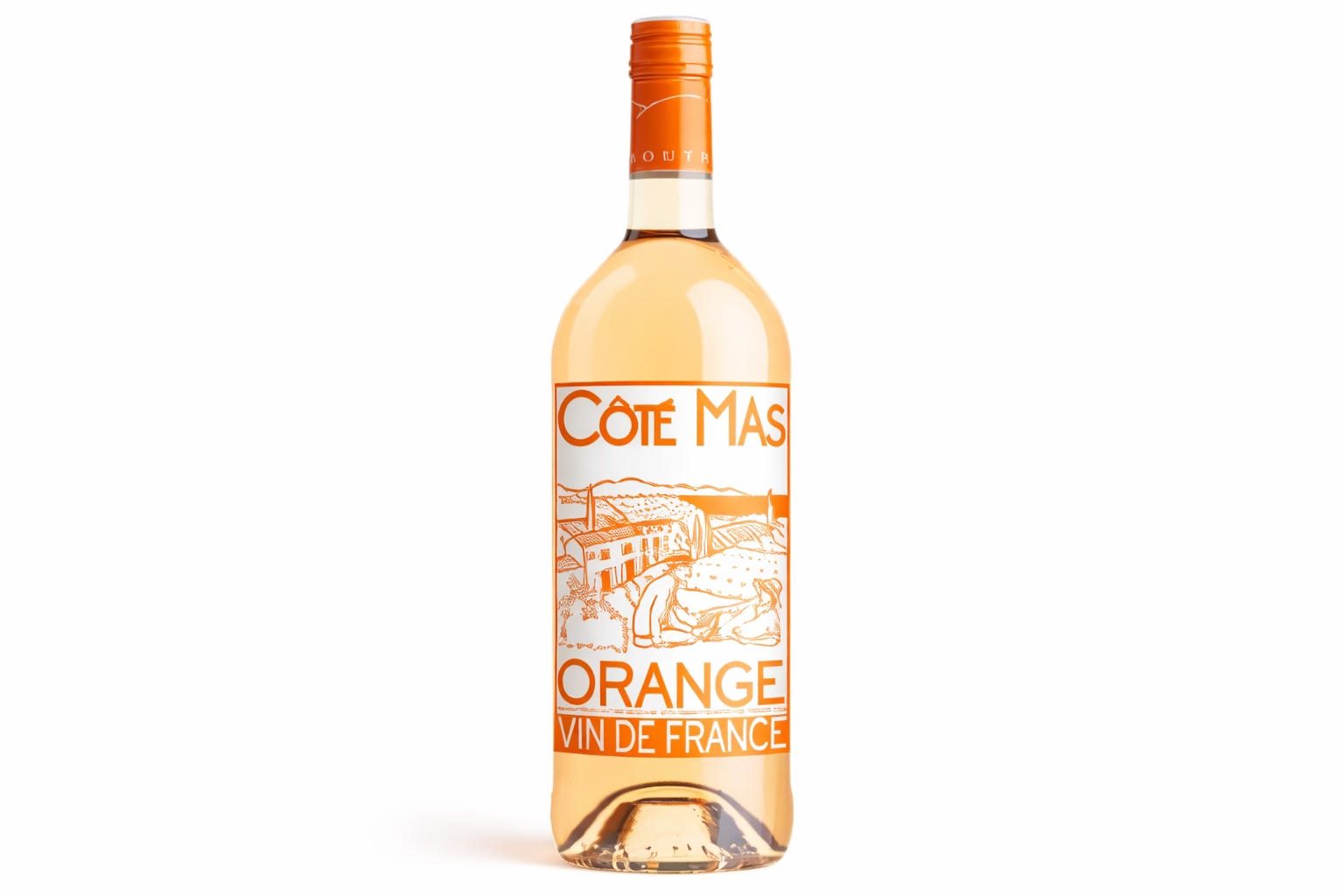
It is important to note that most of these French orange wines emerged outside the official Appellation d’Origine Contrôlée (AOC) system. The AOC regulations in many classic regions did not (and still do not) explicitly recognize a “skin-macerated white” category. In practice, this meant that a cloudy, deep-hued white wine could be rejected by appellation tasting panels for not meeting the expected style or color parameters. Rather than fight such rulings, many winemakers have simply labeled their orange wines as humble Vin de France, a catch-all designation historically viewed as the bottom tier of French wine. Ironically, this once-disdained category has become a refuge for some of France’s most innovative wines, from pétillant-naturel sparklers to skin-contact whites. As one observer noted, Vin de France now hosts “renegade” wines refused by the appellations for their rule-bending styles – think orange Gewurztraminers from Alsace or experimental amphora whites from the Rhône, wines that march to their own beat. The willingness of respected vignerons to forego prestigious AOC labels in favor of creative freedom underscores the cultural significance of this movement. It is a classically French scenario: much as the Impressionist painters once organized their own Salon des Refusés outside the Academy, today’s nonconformist winemakers use the Vin de France category to work outside the system and revive ideas deemed too radical for orthodox institutions.
Character and Craft: How French Orange Wines Are Made
What does a French orange wine taste like, and how do winemakers achieve its distinctive character? In the glass, these wines announce themselves immediately with hues ranging from burnished gold to vivid amber. Many are visibly hazy or unfiltered, an aesthetic shock for those used to crystal-clear whites. The extended skin contact imparts not only color but also phenolic texture (tannins in a white wine!) and a host of intense aromas. Tasting a well-made orange wine can be a beguiling experience: one may encounter notes of apricot skin, dried orange peel, tea leaves, and exotic spice, often coupled with a subtle oxidative or savory undertone. At their best, these wines show nuances and layers of flavor that traditional young whites rarely achieve – an extra dimension of structure and complexity. An Alsace Gewurztraminer vinified as an orange wine, for instance, sheds its overt perfumed sweetness and gains a striking backbone of tannin and saline freshness, a transformation noted as “finesse and unexpected vigor” in such varieties when treated to skin fermentation. Even grapes that sometimes lack acidity or definition in warm climates – say, southern French Chardonnay or Rhone varietals like Roussanne – can take on new life with maceration, gaining freshness and “tenue” (staying power) from the phenolics extracted from their skins.
The craft of making orange wine in France today varies widely, with each producer tweaking the variables of grape, vessel, and timing to achieve a desired style. Maceration can last anywhere from a few days to several months. Shorter macerations (say, 5–10 days) may yield a more delicate amber tint and a gentler tannic grip, preserving more primary fruit character. Long macerations (30 days or more, sometimes extending past fermentation) result in deeper color and a more pronounced tannic structure, often accompanied by a slight oxidative profile if the wines are aged in porous vessels. Winemakers must decide whether to include only skins or also grape stems (some, like Philippe Viret, ferment whole clusters – stems and all – in their white macerations to add even more structure). The choice of fermentation and aging vessels also makes a crucial difference. Many French practitioners of this style have gravitated toward ancient-looking containers: buried clay amphorae or terracotta jarres, as a nod to Georgian tradition. Amphorae allow slow micro-oxygenation and can subtly soften tannins while imparting earthy elements. Other winemakers use neutral oak barrels or even stainless-steel tanks; each choice influences the wine’s evolution. For example, an amphora-fermented Sauvignon in Gaillac might emerge amber and lightly oxidative, evoking apricots and nuts, whereas a stainless-steel skin-contact Chenin Blanc in the Loire could retain a more vivid fruit profile alongside its tannic bite.
One hallmark of orange wines – and a point of contention – is their volatile, uncompromising nature. Because many are made by vintners aligned with “natural wine” principles, they are often produced with minimal intervention: indigenous yeasts, no fining or filtration, and little or no added sulfur. This approach can result in wild, vivid flavors but also the risk of brettanomyces funk or oxidative notes if things go awry. It is not uncommon to detect what French tasters describe as notes d’écurie (stable aromas) or cider-like accents in some early examples. The best producers have learned to avoid the worst of these flaws, achieving a balance where the wines remain clean yet characterful. Indeed, experienced voices note that most orange wines today are sound – you can taste one “without fearing for your health,” as wine critic Ian D’Agata wryly puts it. The learning curve has been steep: winemakers discovered, for instance, that managing exposure to oxygen at key stages can prevent the more unpleasant acrid notes, and that careful sanitation and monitoring are as essential here as in any fine wine production. In France, many orange-wine producers also have backgrounds in classic winemaking, which means they bring technical know-how alongside rebellious spirit. The result is that, particularly in recent vintages, French orange wines show increasing polish. They are still idiosyncratic – boldly aromatic, textural, sometimes austere – but at their pinnacle they offer a “complexity and relief (definition) that do not leave one indifferent,” as one Revue du Vin de France critique observed. These are wines of amplitude and structure, more voluminous than conventional whites, often demanding food and intellectual engagement. Small wonder they are often described as vins de gastronomie, meant for the table, not casual quaffing.
Reception: Skepticism, Acclaim, and a New Generation
The reappearance of orange wines in France over the past 15 years has prompted debate in wine circles. Early on, many orthodox critics and sommeliers were skeptical, if not outright dismissive. The wines’ cloudy appearance, amber color, and sometimes challenging aromas ran counter to entrenched expectations for what a French white wine should be. In 2015, the venerable British writer Hugh Johnson infamously derided orange wines as “a sideshow and a waste of time”, encapsulating the view of many traditionalists who felt these wines were more about winemaking trickery than terroir or typicité. Other skeptics argued that intensive skin-maceration masked the delicate nuances of certain grapes and sites, making all orange wines taste somewhat alike – a critique that they express as the wines tasting “only of the process, and not their origins”. From a French AOC perspective, one could add that orange wines upended the usual hierarchy of color: under AOC rules a wine is either white, rosé, or red, so what to make of a tannic, orange-hued white? For a time, these bottlings were seen as a fringe curiosity reserved for natural wine bars in Paris or export to trend-setting markets abroad.
Yet even as conservative gatekeepers clucked their tongues, a quiet revolution in taste was underway, led by adventurous sommeliers and a younger generation of wine drinkers. By the late 2010s, fashionable restaurants in France and Europe had begun carving out dedicated sections of their wine lists for skin-contact whites, often labeling them explicitly as “orange” wines. High-profile tastings and festivals celebrating natural and orange wines gained traction. What was once relegated to the “unusual whites” corner became a talking point in fine-wine circles. In France, media coverage of the phenomenon expanded from specialist wine journals to general news outlets, especially as the trend intersected with broader discussions about organic and natural wines. A survey in 2023 found that 23% of French adults had heard of orange wine (a remarkable number given the category barely existed a decade prior), and among regular wine consumers awareness was even higher. Notably, interest skews young: consumers under 35 have been the most eager adopters, both in trying and purchasing orange wines, far outpacing their parents’ generation. This generational shift is significant. Younger wine enthusiasts tend to be less beholden to traditional French wine classifications and more drawn to novel experiences. For them, an “orange” Alsace or a skin-fermented Rhone blend is not a heresy but an innovation – a way to taste something historic yet new.
Winemakers like Gérard Bertrand – a prominent figure in Languedoc-Roussillon – have sensed this change in the cultural wind. Bertrand, known for his large portfolio of wines and early embrace of organics and biodynamics, publicly “bet big” on orange wines in recent years. Starting in 2019, he released a series of orange cuvées (often blending Mediterranean white varieties) and invested in marketing them as the next frontier after rosé. His efforts included consumer education, even commissioning studies on French perceptions of orange wine. While some critics see big-brand enthusiasm as premature hype, Bertrand’s advocacy has undeniably raised the profile of orange wines in more traditional segments of the market. In interviews, he highlights the technical strides being made – how adjustments in maceration length or careful selection of grapes can reduce unwelcome bitterness and make orange wines more accessible. In effect, mainstream producers are trying to civilize the category’s image: to prove that an orange wine can be as clean, stable, and refined as a classic white Burgundy, even if made in a non-traditional way. That message, coupled with increasing exposure, seems to be resonating. A 2023 poll indicated that once French consumers learn what an orange wine actually is (a “white wine made like a red”), an overwhelming majority express curiosity and willingness to taste it. The initial shock value is wearing off; intrigue and acceptance are growing.
Analyzing the Implications and Outlook
Beyond the buzz and novelty, the rise of French orange wines carries deeper implications for the world of fine wine. Culturally, it represents a reconnection with ancient practices and a challenge to the rigid categories that have defined wine in the modern era. The fact that serious French vintners are embracing methods from the distant past – and doing so in defiance of their own appellation system – suggests a searching for authenticity and originality outside the classic template. In a way, orange wines have become a symbol of the broader natural wine ethos: a pursuit of wines that express “how things used to be” before industrial enology, even if that means defying contemporary norms. As one commentator observed, there is a certain nostalgie de l’authenticité perdue at play – a yearning for lost authenticity. Yet the movement is not simply antiquarian. It is also experimental and forward-looking, asking what new (or rediscovered) colors and textures can contribute to France’s wine palette in the 21st century.
From a structural standpoint, the growing legitimacy of orange wines is testing the flexibility of France’s wine institutions. To date, no major AOP has officially created a category for skin-macerated whites. But pressure may build in the coming years if more producers in, say, Alsace or the Southern Rhône want to include orange styles under their appellation umbrella rather than label them Vin de France. There is precedent abroad: in Italy, a few DOCs (such as Collio and Ramato styles for Pinot Grigio) accommodate skin-contact whites historically, and the international wine community has begun to formalize the category. In 2020 the International Organisation of Vine and Wine (OIV) issued a definition and guidelines for “white wine with maceration,” essentially codifying what an orange wine is and how it can be made. This kind of recognition suggests that orange wine is not a passing fad to be ignored, but a bona fide style worthy of official terminology. France’s appellation authorities tend to be conservative, but they also respond (albeit slowly) to market realities – and the reality is that orange wines now feature on Michelin-starred restaurant lists, in specialty wine shops, and in the cellars of serious collectors. While it’s too early to predict an AOC rule change, the continued success of these wines could eventually prompt French wine regions to make room for the quatrième couleur within the fold, just as they have gradually accepted other once-unorthodox practices (organic viticulture, screwcap closures, etc.) over time.
For now, French orange wines remain a small but vibrant niche. Their production volumes are tiny relative to traditional whites – often just a few thousand bottles per cuvée, since many are experimental or made from specific vineyard plots. Quality, too, still shows variability. Even passionate advocates admit that not every example is a triumph; some bottles can be excessively cloudy, volatile, or just plain odd. But the overall trajectory is one of improvement and integration. Skilled winemakers have begun to demonstrate that skin-maceration is not antithetical to terroir expression but can, when handled with care, offer a different lens on familiar grapes. In the Jura, for instance, a few producers have macerated Savagnin grapes on skins to explore an alternative to the region’s famous oxidative vin jaune, yielding wines that highlight Savagnin’s phenolic intensity in a new way. In the Loire, experimental orange wines from Chenin Blanc or Romorantin can reveal an added dimension of tannic structure underlying these high-acid whites. These efforts are prompting critics to revisit their assumptions. As the category sheds its “funky fad” image and more top-tier producers dip a toe in (sometimes quietly – a reputable château might make a trial batch for their own interest), orange wines inch closer to mainstream respectability.
What does all this mean for the connoisseur and the long-term evolution of French wine? Fundamentally, the orange wine phenomenon enriches the diversity of expression available in France’s vineyards. It expands the palette of styles, offering something that sits intriguingly between white and red wine in character. For sommeliers, that means new pairing possibilities – these wines, with their tannins and savory elements, can marry with foods that would overwhelm a traditional white. For collectors and oenophiles, it offers new analytical pleasures: the best examples carry a sense of origin and varietal identity, yet refracted through an ancient winemaking prism, often revealing unexpected aging potential. Indeed, the tannic backbone of many orange wines may help them evolve in bottle for a decade or more, much like a light red; early indications from pioneering producers suggest that some can age gracefully, developing harmony between their fruit, tannin and oxidative notes. This longevity, if consistently demonstrated, could further boost their stature in fine wine circles.
Lastly, the success of orange wines highlights a philosophical shift: a willingness among France’s wine elite to question dogma and embrace plurality. It’s telling that a storied estate like Domaine Weinbach or a large négociant like Gérard Bertrand can champion a style that a generation ago would have been considered “vins de curiosité” at best. The dialogue around orange wine has moved from “Pourquoi pas?” to “Comment bien faire?” – from “Why even bother?” to “How do we do it well?”. As one detailed industry report concluded, orange wines may never be the “new black” – they won’t overtake classic reds or whites in volume or universal popularity – but they are unquestionably “here to stay” as a permanent part of the wine landscape. Their endurance has been cemented by genuine consumer interest and by producers proving that these wines can achieve excellence (as evidenced by high scores in critical tastings and inclusion in serious collections). In the end, the French embrace of orange wine underscores the dynamic, living nature of wine tradition. Even in a country so rooted in heritage and appellation rules, innovation finds a way. Sometimes that innovation looks like a step back in time – an amphora buried in a cellar, reviving the whispers of antiquity – yet it can also feel like a step forward, adding new shades to the spectrum of what French wine can be. The story of French orange wines is still in its early chapters. But it already offers a rich case study in how an ancient idea, thoughtfully applied, can challenge modern sensibilities and ultimately broaden the canon of fine wine with its amber glow.