
Aldi’s Rosé Colour Chart Targets £103m in Lost UK Wine Sales
Aldi UK says colour shapes rosé choices so strongly that the wrong shade may cost the market £103 million a year.
For many wine drinkers, choosing a bottle is a question of grape variety, region, producer or price. With rosé, however, another factor can outweigh almost everything else: colour.
New consumer research commissioned by Aldi UK suggests that British rosé drinkers have remarkably firm ideas about what their wine should look like. So firm, in fact, that nearly one in three respondents said they had previously refused a glass of rosé simply because its shade was not what they expected.
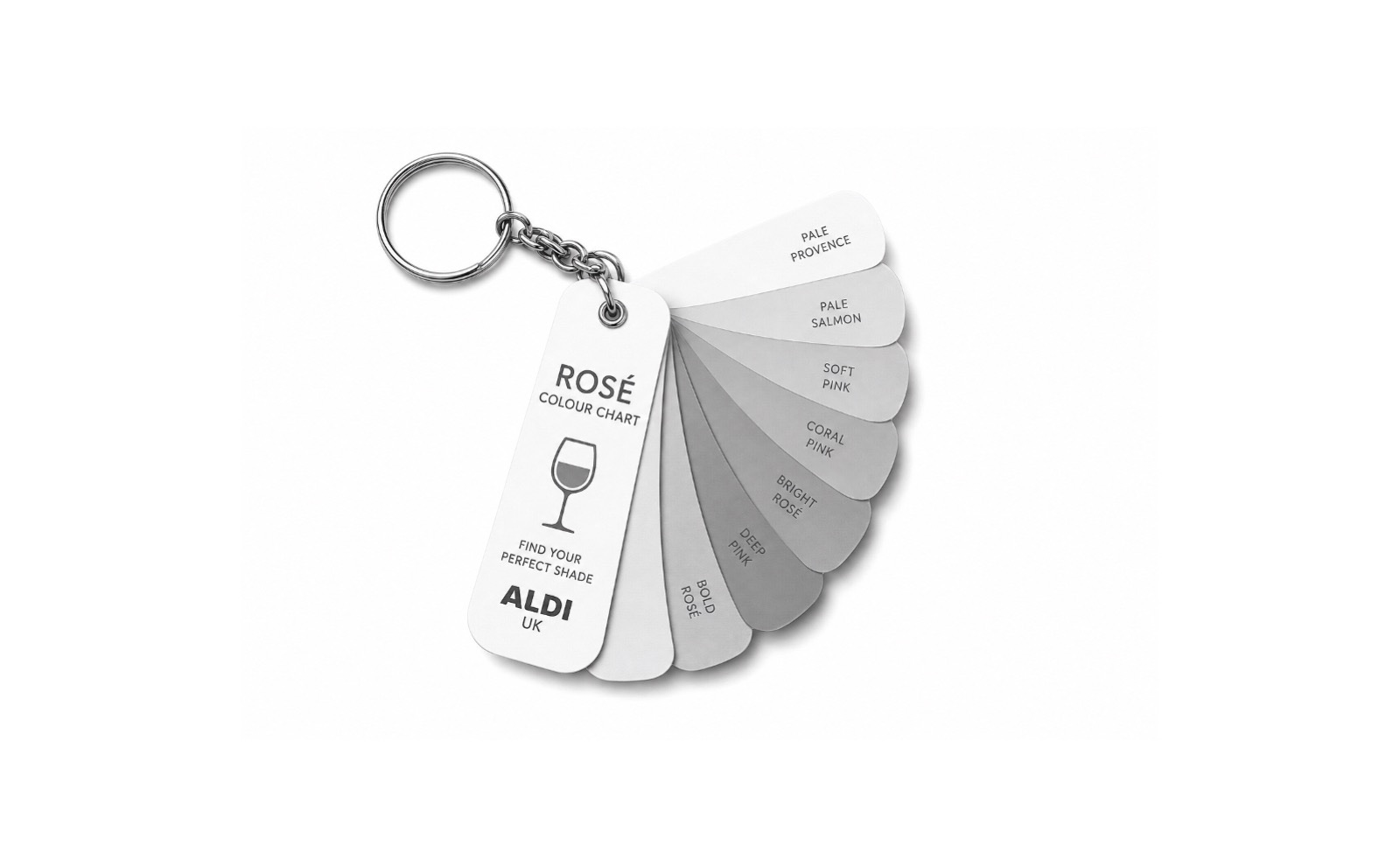
Aldi believes those colour-driven rejections could represent as much as £103 million (€121 million) in lost rosé sales every year. Its answer is an unusually simple piece of wine marketing: a portable rosé colour chart, designed to help consumers identify and communicate their preferred shade.
The initiative highlights an enduring peculiarity of the rosé category. Few wines are judged so immediately—or so emotionally—by their appearance.
Rosé colour has become a powerful buying signal
Rosé has long enjoyed a visual advantage over red and white wine. From almost translucent blush to salmon, coral and deep pink, its spectrum of colours makes it particularly photogenic and highly visible on social media.
But Aldi UK’s findings suggest that appearance is doing much more than generating attractive photographs.
In the survey of 1,000 UK consumers, 23% of adults said they routinely choose rosé based solely on its colour. Meanwhile, 56% described colour as an important factor when buying the wine.
The preferred shade was pale Provence-style pink, followed by a pale salmon colour associated with Mediterranean rosés.
That preference reflects a broader aesthetic that has helped shape the international rosé market in recent years: light, delicate-looking wines whose appearance evokes Provence, summer terraces and coastal holidays.
Yet the research also shows how restrictive those expectations can become. Thirty-one percent of respondents said they had rejected a glass of rosé because the colour was wrong for them.
For retailers and producers, that represents a striking challenge. A consumer may never taste the wine—or discover whether they enjoy its aromas, texture or flavour—because the first visual impression has already made the decision.
Aldi creates a rosé colour chart to make choosing easier
To address what it sees as a significant barrier to rosé purchases, Aldi UK created a colour guide in the form of a keyring-sized rosé shade chart.
The idea is deliberately straightforward. Consumers identify the colour of rosé they prefer and can then use the chart while shopping, ordering at a bar or restaurant, or asking somebody else to buy a bottle for them.
According to Aldi’s research, choosing rosé for another person can create an unexpected amount of anxiety. Some 32% of those surveyed said selecting a rosé for someone else was stressful, while 29% said they did not trust other people to choose the right shade on their behalf.
A physical colour reference potentially removes some of that uncertainty. Rather than trying to explain a preference for “very pale pink”, “salmon” or “something Provence-like”, the buyer can simply point to a shade.
It is a playful idea, but it also speaks to a genuine problem in wine communication. Consumers do not always share the industry’s vocabulary, and visual cues can sometimes communicate preferences more efficiently than tasting notes or technical descriptions.
UK rosé sales rise as summer temperatures climb
The campaign also arrived at an opportune moment for the British rosé market.
Amid hot summer weather in the UK and elsewhere in Europe, Aldi reported particularly strong demand for some of its rosé wines. Sales of Chassaux et Fils Sainte-Victoire, for example, had doubled compared with the previous year.
The retailer’s survey reinforces the close relationship between rosé and warm-weather drinking. Around two-thirds of respondents identified summer as their preferred season for drinking rosé.
The average consumer surveyed expected to drink 20 glasses of rosé over the summer, with average spending of £6.40 (€7.50) per glass and £15.60 (€18.30) per bottle.
Rosé’s seasonal identity remains one of the category’s greatest commercial strengths. Sunshine, holidays, outdoor dining and social occasions all provide a natural setting for the wine.
But the very strength of that image can also reinforce narrow ideas about what rosé is supposed to look—and taste—like.
Consumers still misunderstand how rosé wine is made
Despite rosé’s popularity, Aldi’s research found substantial gaps in consumer knowledge.
More than half of respondents believed rosé is made by blending red and white grapes, while around one in six thought it came from grape varieties specifically intended for rosé production.
In reality, most rosé is produced from red wine grapes, with the winemaker limiting the time that the juice remains in contact with the grape skins. Because much of a red grape’s pigment is found in its skin, shorter maceration generally results in a lighter-coloured wine.
There are several legitimate rosé-making techniques, and practices vary according to appellation, region and wine style. Blending red and white wine can be used in certain contexts, most notably for some rosé sparkling wines, but it is not the standard method behind most still rosé.
Aldi wine expert Sam Caporn MW is using the colour-chart campaign to challenge some of the assumptions surrounding the category—particularly the belief that paler automatically means better.
Does pale rosé really mean higher quality?
The international success of Provence rosé has helped make very pale pink one of the most commercially desirable colours in wine.
Yet colour alone is not a reliable indicator of quality.
A deeper rosé is not necessarily heavier, sweeter or less sophisticated, just as a very pale wine is not automatically finer. Grape variety, growing conditions, winemaking decisions and skin-contact time can all influence colour.
Caporn is encouraging consumers to move beyond the equation of pale colour with premium quality and to explore a broader range of rosé styles.
She also recommends enjoying rosé while it is relatively young, when the freshness and fruit character associated with many examples are at their most expressive.
And when it comes to serving the wine, Aldi is embracing a deliberately relaxed approach.
Adding ice cubes remains controversial—51% of the British consumers surveyed considered putting ice in rosé a wine faux pas—but Caporn argues that drinkers should feel free to experiment. That could mean serving rosé over ice or adding ingredients that bring extra freshness, flavour or even spice.
For a category so closely associated with easy-going summer drinking, the message is clear: rosé does not always need to come with rigid rules.
A marketing tool designed to broaden rosé choices
The colour chart is therefore intended to do more than help shoppers find the same shade every time.
Julie Ashfield, commercial director at Aldi UK, said the research showed just how strongly consumers feel about the colour of rosé, with many acknowledging that they had turned down a glass when its appearance did not match their preference.
Aldi’s shade guide aims to remove some of that uncertainty while also encouraging drinkers to consider the characteristics associated with different rosé styles.
That second objective may prove particularly interesting for the wider wine industry.
Colour is clearly an effective shortcut for consumers, but if pale pink becomes the only acceptable visual code for quality rosé, producers of darker or differently styled wines face an immediate disadvantage—regardless of what is in the glass.
Helping consumers understand that rosé exists on a spectrum could therefore create opportunities for regions, grape varieties and producers whose wines do not conform to the fashionable Provence palette.
From wine education to customer engagement
Aldi also gave the campaign a scarcity-driven marketing twist.
The rosé colour-chart keyrings were not placed on general sale or distributed freely in stores. They were offered in limited quantities through a dedicated email campaign and prize draw, with entries closing on 11 August 2026.
That approach turned a piece of wine education into an engagement tool, giving Aldi another way to interact directly with customers while gathering insight into a category experiencing strong seasonal demand.
More importantly, the campaign draws attention to a question with implications well beyond one supermarket chain: how much does the colour of rosé determine what consumers are willing to buy?
Aldi’s research suggests the answer is: a great deal.
For wine producers, retailers and restaurants, the lesson is not necessarily to make every rosé paler. It may instead be to communicate more clearly what different shades mean—and, just as importantly, what they do not mean.
After all, the colour may persuade a consumer to pick up the bottle. But broadening their understanding of rosé could persuade them to discover something beyond their usual shade of pink.