
The 1855 Bordeaux Classification: How a Trade Ranking Became Wine’s Most Enduring Hierarchy
How brokers, market prices and two rare changes shaped the world’s most famous hierarchy of Médoc and Sauternes estates.
Few wine classifications carry the aura of the 1855 Bordeaux Classification. Its vocabulary—Premier Cru, Deuxième Cru, Cinquième Cru, Premier Cru Supérieur—has become part of the language of fine wine. Its most celebrated names, from Château Lafite-Rothschild and Château Margaux to Château d’Yquem, sit at the summit of the global wine market. And almost two centuries after the hierarchy was drawn up, the words Grand Cru Classé en 1855 still possess extraordinary commercial and cultural power.
Yet much of what is casually repeated about the classification is misleading.
It was not created through a grand blind tasting. Napoleon III did not personally sit down and rank the châteaux. The modern figure of 88 classified estates is not the number that appeared on the original document of 18 April 1855. Mouton Rothschild was not originally a First Growth. Château Cantemerle was not even on that April list. And although the system is frequently described as “unchanging”, it has in fact undergone two formal alterations.
The real story is more interesting. The 1855 classification was the product of a sophisticated wine trade, built on years of price information, reputation and commercial experience. What began as a practical ranking prepared for the Paris Exposition Universelle would eventually become one of the most durable hierarchies in the history of wine.
Bordeaux already had a hierarchy before 1855
The classification did not suddenly invent the idea that some Bordeaux estates were more prestigious than others.
Long before 1855, merchants, buyers and wine writers were already distinguishing between different levels of Bordeaux wine. During his visit to Bordeaux in 1787, Thomas Jefferson recorded Lafite, Margaux, Latour and Haut-Brion among the region’s leading wines. In 1816, the influential wine writer André Jullien also published a hierarchy.
By the middle of the nineteenth century, therefore, Bordeaux possessed something close to a functioning commercial pecking order. Producers had reputations. Merchants knew which wines commanded higher prices. Brokers understood which estates had demonstrated consistency over time.
The achievement of 1855 was not to create this hierarchy from nothing. It was to formalize a market reality that had already been developing for decades.
Why was the Bordeaux Classification created in 1855?
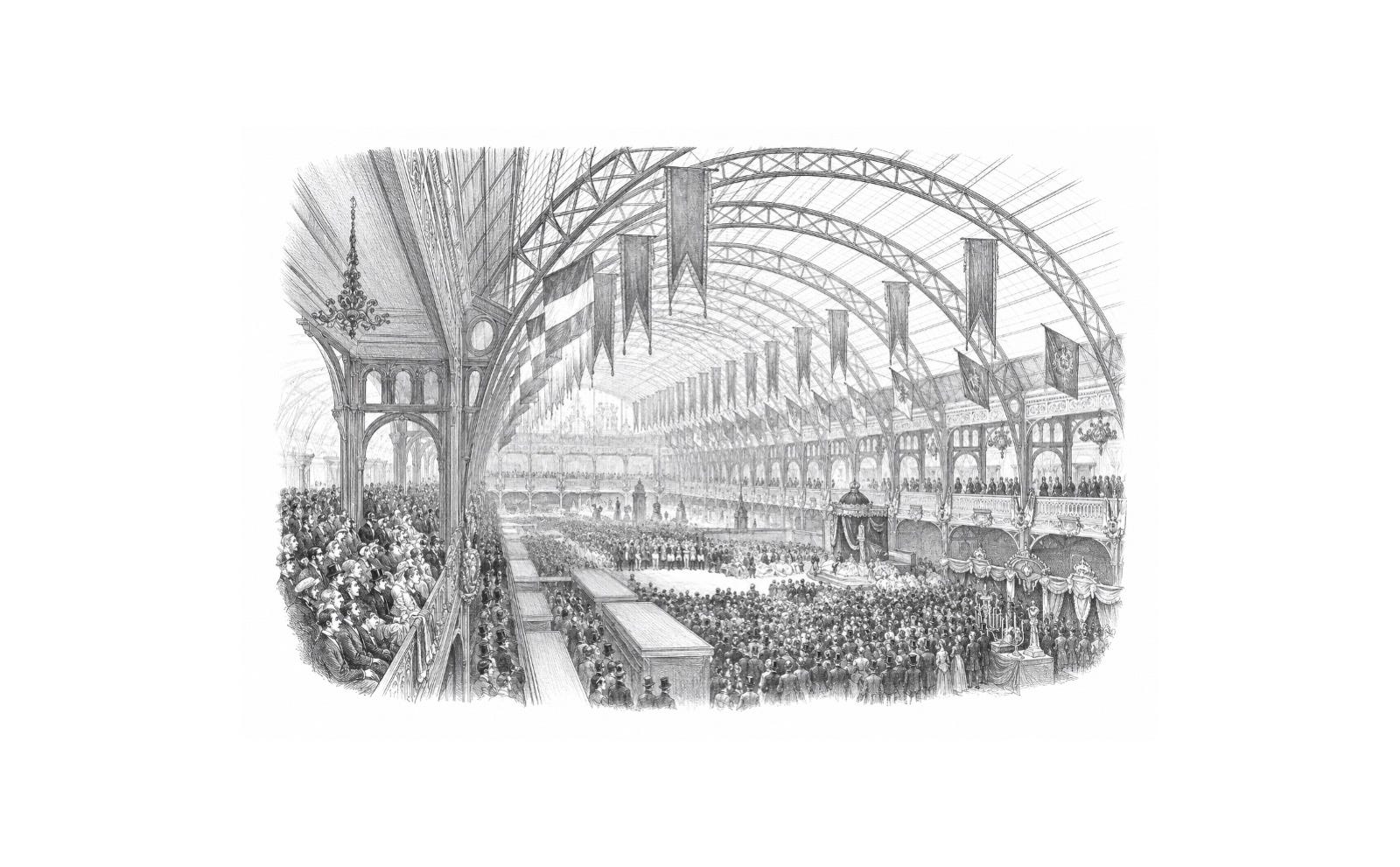
The immediate context was the Exposition Universelle of 1855 in Paris, held under Napoleon III.
Bordeaux wanted its leading wines represented in a systematic way. But the administrative chain matters, because the often-repeated version in which Napoleon III personally commissioned or dictated a ranking of individual châteaux goes too far.
The documented sequence is more precise: the exhibition took place under Napoleon III; the Chambre de commerce de Bordeaux, the Bordeaux Chamber of Commerce, became involved; and on 5 April 1855 it instructed the Syndicat des courtiers, the organization representing Bordeaux wine brokers, to prepare as exact and complete a list as possible of the classified red growths, identifying their locations and placing them into five categories.
Thirteen days later, on 18 April 1855, the brokers’ list was ready.
That document became the foundation of the classification still invoked today.
The choice of brokers was logical. Bordeaux’s courtiers occupied a privileged position between producers and the wine trade. They knew the vineyards, but they also knew how the market valued their wines. Their expertise combined agricultural familiarity with years of commercial data.
That dual perspective is central to understanding how the ranking worked.
No, the 1855 Classification was not decided by a blind tasting
Perhaps the most persistent myth surrounding the Bordeaux Classification of 1855 is that the estates were assembled for some nineteenth-century version of a modern comparative tasting.
They were not.
Academic historical reconstruction indicates that no special classification tasting was organized, no new tour of the châteaux was undertaken for the purpose, and producers were not consulted one by one. The brokers already possessed extensive knowledge derived from the wine trade.
That makes the 1855 system fundamentally different from a competition in which judges taste a set of wines and award medals on the day.
Instead, market price served as the principal operational measure. Average trading prices reflected how the market had valued an estate over time. The official historical account also stresses consistency and sustained quality over a period of years.
The most accurate way to understand the classification, therefore, is as a market-based hierarchy in which long-term reputation and consistency were expressed through trading prices.
Price was not simply a random number detached from quality. In nineteenth-century Bordeaux, a wine able to maintain a high price year after year was demonstrating that merchants and buyers consistently regarded it as desirable.
At the same time, describing the system as nothing more than a mechanical spreadsheet of prices would also be too crude. The brokers brought accumulated knowledge of estates and their commercial standing to the task.
The classification was, in effect, the market’s memory written down.
What did the original 1855 Bordeaux Classification contain?
Here the numbers require particular care.
The document dated 18 April 1855 contained 57 classified red wines divided across five growths and 21 classified sweet white wines divided across three levels. That means the original April document contained 78 classified entries, not 88.
Among the reds, there were four Premiers Crus, 12 Seconds Crus, 14 Troisièmes Crus, 11 Quatrièmes Crus and 16 Cinquièmes Crus.
The four original red First Growths were:
Château Lafite, Château Margaux, Château Latour and Haut-Brion.
Mouton was classified among the Second Growths.
For the sweet whites of Sauternes and Barsac, the hierarchy was different. One estate stood alone in the highest category: Château d’Yquem, classified as Cru Supérieur. Beneath Yquem came nine First Growth entries and 11 Second Growth entries.
The white classification is also an area where the surviving documentation leaves a small but important gap. The available institutional sources clearly document the Chamber of Commerce’s 5 April request concerning the red growths. They do not document with equal clarity a separate mandate asking for the Sauternes and Barsac classification. What is certain is that the white hierarchy existed on 18 April and is supported by both the historical document and scholarly reconstruction.
Why do some sources say there were 57 red crus and others 58?
Because both numbers can be correct—provided the date is specified.
On 18 April 1855, the red classification contained 57 entries.
Then came the first formal alteration.
Château Cantemerle, now a Fifth Growth in the Haut-Médoc, was added to the Cinquièmes Crus on 16 September 1855. From that point onward, the 1855 red classification contained 58 entries.
So the clean formulation is simple:
57 red crus on 18 April 1855; 58 after Cantemerle was added in September of the same year.
Calling 58 the number on the “original April list” is inaccurate. Calling 57 the final red total for the whole of 1855 ignores Cantemerle’s later admission.
Why are almost all the red classified growths in the Médoc?
Geographically, the 1855 red classification is overwhelmingly a Médoc affair.
Today it consists of 60 classified properties in the Médoc and one outside it: Château Haut-Brion, historically associated with Pessac and Graves and now situated in the Pessac-Léognan context.
That makes Haut-Brion one of the classification’s great exceptions. It was not only one of the original four First Growths; it was also the single red classified growth outside the Médoc.
The absence of famous Right Bank regions such as Saint-Émilion and Pomerol requires more nuance.
Historical research shows that wines from Saint-Émilion and the surrounding Right Bank traditionally moved through Libourne rather than Bordeaux. Meanwhile, the 1855 hierarchy was created by brokers embedded in the Bordeaux trading system and strongly reflected the commercial information available within that network.
It is therefore reasonable to conclude that the institutional and commercial geography of the trade helped determine which wines entered the classification.
But that conclusion should be identified for what it is: a well-supported historical inference. The research dossier did not uncover a primary document explicitly stating, in so many words, that Saint-Émilion and Pomerol were excluded because their trade ran through Libourne.
And what about dry white Bordeaux?
They are not part of this classification.
The white branch of the 1855 Bordeaux Classification concerns the sweet wines of Sauternes and Barsac. Dry white wines from Graves or elsewhere in Bordeaux were not given a separate place in the system.
That distinction is especially important because the term “1855 classification” is sometimes used loosely, as though it covered all prestigious Bordeaux wines.
It does not.
From 78 original entries to 88 classified names today
One of the most confusing numbers associated with the classification is 88.
Today, institutional Bordeaux sources recognize 61 classified red names and 27 classified sweet white names, giving a total of 88. But it is wrong to say that 88 châteaux were classified on 18 April 1855.
Much of the difference is explained not by promotions but by the history of the properties themselves.
An original classification entry did not always remain a single estate forever. Properties could be divided, inherited or reorganized. Historical names could develop into several successor châteaux, while other names disappeared or became absorbed into different estates.
The original list, for example, contained a single red entry called Léoville. The modern classification contains three Second Growths carrying the Léoville heritage: Château Léoville Las Cases, Château Léoville-Poyferré and Château Léoville Barton.
Likewise, the original white classification included one entry called Doisy. Today the Second Growths include Château Doisy Daëne, Château Doisy-Dubroca and Château Doisy-Védrines.
This is why comparing “57 red entries in April 1855” with “61 red names today” and assuming that four estates must have been promoted into the system produces the wrong answer.
The classification’s genealogy is more complicated than its ranking.
The complete 1855 Bordeaux red classification today
The modern red classification contains 61 names distributed across five levels.
Premiers Crus: 5 First Growths
The five First Growths are Château Lafite-Rothschild in Pauillac, Château Latour in Pauillac, Château Margaux in Margaux, Château Mouton Rothschild in Pauillac and Château Haut-Brion in Pessac-Léognan.
Only four occupied this level in April 1855. Mouton Rothschild arrived later.
Seconds Crus: 14 Second Growths
The Second Growths are Château Rauzan-Ségla, Château Rauzan-Gassies, Château Léoville Las Cases, Château Léoville-Poyferré, Château Léoville Barton, Château Durfort-Vivens, Château Gruaud Larose, Château Lascombes, Château Brane-Cantenac, Château Pichon Baron, Château Pichon Longueville Comtesse de Lalande, Château Ducru-Beaucaillou, Château Cos d’Estournel and Château Montrose.
Troisièmes Crus: 14 Third Growths
The Third Growths are Château Kirwan, Château d’Issan, Château Lagrange, Château Langoa Barton, Château Giscours, Château Malescot Saint-Exupéry, Château Boyd-Cantenac, Château Cantenac Brown, Château Palmer, Château La Lagune, Château Desmirail, Château Calon Ségur, Château Ferrière and Château Marquis d’Alesme Becker.
Quatrièmes Crus: 10 Fourth Growths
The Fourth Growths are Château Saint-Pierre, Château Talbot, Château Branaire-Ducru, Château Duhart-Milon, Château Pouget, Château La Tour Carnet, Château Lafon-Rochet, Château Beychevelle, Château Prieuré-Lichine and Château Marquis de Terme.
Cinquièmes Crus: 18 Fifth Growths
The Fifth Growths are Château Pontet-Canet, Château Batailley, Château Haut-Batailley, Château Grand-Puy-Lacoste, Château Grand-Puy Ducasse, Château Lynch-Bages, Château Lynch-Moussas, Château Dauzac, Château d’Armailhac, Château du Tertre, Château Haut-Bages Libéral, Château Pédesclaux, Château Belgrave, Château de Camensac, Château Cos Labory, Château Clerc Milon, Château Croizet-Bages and Château Cantemerle.
Which appellations dominate the 1855 red classification?
The geographical concentration is striking.
Of the 61 current red classified names, Margaux accounts for 21, Pauillac for 18, Saint-Julien for 11, Saint-Estèphe for five and Haut-Médoc for five. The remaining estate is Haut-Brion in Pessac-Léognan.
In other words, the classification remains overwhelmingly concentrated in a relatively small stretch of Bordeaux’s Left Bank.
This is one reason the term “Médoc Classification of 1855” is so often encountered. Yet that shorthand should never obscure Haut-Brion, the Graves exception that has been part of the highest rank from the beginning.
The complete 1855 classification of Sauternes and Barsac today
The sweet-wine side of the classification now comprises 27 classified names.
Premier Cru Supérieur: Château d’Yquem
At the summit stands Château d’Yquem, alone in the category now generally rendered as Premier Cru Supérieur.
Its singular position is not a modern invention. Yquem already occupied the unique highest white category in the original 1855 hierarchy.
Premiers Crus: 11 First Growths
The modern First Growths are Château La Tour Blanche, Château Lafaurie-Peyraguey, Clos Haut-Peyraguey, Château de Rayne-Vigneau, Château Suduiraut, Château Coutet, Château Climens, Château Guiraud, Château Rieussec, Château Rabaud-Promis and Château Sigalas-Rabaud.
Seconds Crus: 15 Second Growths
The Second Growths are Château de Myrat, Château Doisy Daëne, Château Doisy-Dubroca, Château Doisy-Védrines, Château d’Arche, Château Filhot, Château Broustet, Château Nairac, Château Caillou, Château Suau, Château de Malle, Château Romer, Château Romer-du-Hayot, Château Lamothe and Château Lamothe-Guignard.
Together, the one Premier Cru Supérieur, 11 Premiers Crus and 15 Seconds Crus produce the present total of 27 sweet white classified names.
Mouton Rothschild and the most famous promotion in Bordeaux
No story about the 1855 Bordeaux Classification is complete without Château Mouton Rothschild.
On the original list, Mouton was a Second Growth.
That status became one of the most famous anomalies in fine wine, particularly as the estate’s prestige increased. The hierarchy was not subject to regular revision, however, and Mouton remained among the Seconds for more than a century.
Then, in 1973, the exceptional happened: Château Mouton Rothschild was promoted to Premier Cru.
Institutional and legal sources confirm the promotion and the year. The specialist historical source Féret gives the date of the ministerial measure as 21 June 1973, although the dossier notes that the original directly accessible Journal officiel version of that specific measure was not located during its research.
What matters for the history of the classification is beyond dispute: Mouton began as a Second Growth and has been a First Growth since 1973.
The promotion transformed the famous four red First Growths of April 1855 into the five recognized today.
Has the 1855 Classification really “never changed”?
Not literally.
The official historical account identifies two formal changes: Cantemerle’s addition as a Fifth Growth in September 1855 and Mouton Rothschild’s promotion to First Growth in 1973.
So why is the classification so often described as immutable?
Because unlike classifications that are periodically reassessed, the 1855 system does not undergo a regular cycle of reclassification.
That is the meaningful sense in which it is stable. A château does not move up or down every few years because of recent vintages, a change in ownership or a run of critical scores.
But “never changes” is too absolute as a statement of historical fact.
The distinction matters. The system is extraordinarily resistant to change, not untouched by it.
Does a château’s 1855 rank tell you how good its wine is today?
Not automatically.
The ranking is a historical classification rooted in nineteenth-century commercial reputation. The official historical material itself recognizes that market prices and relative reputations can shift over time.
A First Growth designation is therefore not the result of a fresh annual judgment declaring that a particular wine is objectively superior in the current vintage to every Second Growth. Nor does a Fifth Growth rank mean that the wine is permanently destined to perform at a fixed modern quality level.
The classification tells us something more specific—and, historically, something more fascinating.
It tells us how Bordeaux’s commercial elite was structured in the middle of the nineteenth century and which properties acquired the right to carry that history forward.
Modern quality and historical rank may interact powerfully, but they are not identical concepts.
Was the 1855 Classification legally “official” from the beginning?
This is another area in which a single word can conceal a complicated history.
The classification certainly emerged from an official institutional context. It was connected with the Exposition Universelle, and the Bordeaux Chamber of Commerce instructed the brokers to prepare the list.
But that does not mean the 18 April 1855 document was created as a national statutory classification comparable to a modern wine-law framework.
An academic historical source cited in the dossier reports that a Bordeaux court ruled in 1869 that the classification lacked official legal status. Importantly, the dossier was unable to locate the original judgment in the French legal or archival sources it searched, so that point rests on the modern scholarly reconstruction rather than a verified primary court document.
The legal position becomes much clearer in the twentieth century.
From 1949, consolidated French regulation explicitly made an exception allowing relevant Bordeaux estates appearing in the 1855 classification to use hierarchical terminology such as cru classé. Current regulation likewise gives the historical classification explicit meaning in wine-labelling rules, permitting relevant terms such as cru classé or grand cru classé, together with rank and a reference to “1855” where applicable.
The most precise description, therefore, is that the hierarchy was commissioned by the Bordeaux Chamber of Commerce for the official 1855 Exposition Universelle context and was later explicitly recognized in French wine regulation.
That is more accurate than simply saying it was enacted into national law on 18 April 1855.
Not every classified château actually exhibited its wine in Paris
Another assumption worth discarding is that the classification simply represented the wines physically displayed at the Exposition Universelle.
A place in the hierarchy did not necessarily mean that the estate sent wine to Paris. The official historical material indicates that most of the classified properties were not actually represented at the exhibition and that the historical documentation marked absences.
The classification and the exhibition were therefore related, but they were not the same thing.
The Paris fair provided the occasion. The classification attempted something broader: to describe the established hierarchy of Bordeaux’s leading wines.
Why the 1855 Bordeaux Classification still matters
Its survival is remarkable.
The classification originated in a world of nineteenth-century brokers, tonneaux, handwritten commercial documents and an international exhibition. The Bordeaux of today operates in an entirely different commercial environment. Properties have changed hands. Estates have divided. Appellation law has developed. Global demand, professional criticism, auction markets and international collectors have transformed the economics of fine wine.
Yet the hierarchy remains immediately legible.
“First Growth” still means something before the bottle has even been opened.
That durability comes partly from scarcity. Because the classification is not routinely redrawn, inclusion is historically fixed rather than constantly contested through scheduled re-ranking. Its names have accumulated more than 170 years of recognition around their status.
It also survives because the original method, although very different from modern tasting competitions, captured something durable: reputation expressed over time through the market.
The brokers of 1855 did not try to predict the exact quality of a bottle in 2026. They recorded the hierarchy they knew.
That hierarchy then became history itself.
What the 1855 Classification does—and does not—tell wine lovers
For contemporary drinkers, the best way to use the classification is neither to worship it unquestioningly nor to dismiss it as an obsolete relic.
It is first and foremost a historical framework.
It explains why certain Left Bank names occupy such a powerful place in Bordeaux culture. It reveals how closely wine prestige and commerce were connected even in the nineteenth century. It provides a window into the geographic structure of Bordeaux’s old trading system. And it helps explain why terms such as First Growth and Second Growth carry so much weight today.
What it does not provide is an annually updated league table of present-day wine quality.
A château’s performance can evolve. Market prices can change. Winemaking can improve or decline. But the 1855 rank remains anchored in the historical classification rather than recalculated to reflect every shift.
Understanding that distinction makes the system more interesting, not less.
Frequently asked questions about the 1855 Bordeaux Classification
How many châteaux are in the 1855 Bordeaux Classification?
The current institutional classification contains 88 classified names: 61 red and 27 sweet white. That should not be confused with the original document of 18 April 1855, which contained 57 red and 21 white entries, or 78 in total.
Were 88 châteaux classified in 1855?
No. Saying “88 châteaux were classified in 1855” incorrectly projects the modern structure back onto the April 1855 document. The current total reflects later property histories, successor estates and Cantemerle’s 1855 addition.
How many First Growth Bordeaux estates are there?
There are currently five red First Growths in the 1855 classification: Château Lafite-Rothschild, Château Latour, Château Margaux, Château Mouton Rothschild and Château Haut-Brion.
The original April 1855 list contained four. Mouton Rothschild was then a Second Growth.
When was Mouton Rothschild promoted to First Growth?
1973. It is the classification’s famous upward change in rank.
Was Château Cantemerle on the original April 1855 list?
No. Cantemerle was added as a Fifth Growth on 16 September 1855, raising the red total from 57 to 58.
Is Château Haut-Brion in the Médoc?
No. Haut-Brion is the geographical exception among the red classified growths. Historically identified with Pessac/Graves, it is now associated with Pessac-Léognan.
Are Saint-Émilion and Pomerol included in the 1855 Classification?
No. The 1855 red hierarchy consists of Médoc estates plus Haut-Brion. Historical evidence shows that the Right Bank wine trade around Saint-Émilion operated largely through Libourne rather than Bordeaux, which helps explain its absence from a classification created by Bordeaux brokers, although the dossier found no primary instruction explicitly stating that this was the reason for exclusion.
Does the 1855 Classification include white wine?
Yes, but specifically the sweet wines of Sauternes and Barsac. Dry white Bordeaux does not form a separate category within the system.
What is the highest-ranked sweet Bordeaux in the 1855 Classification?
Château d’Yquem, uniquely classified at the highest white level, Premier Cru Supérieur.
Was the classification based on tasting?
Not on a special one-off classification tasting. Historical research indicates that the brokers worked from accumulated commercial knowledge and market information rather than organizing a new blind tasting or touring every estate for the ranking.
A hierarchy born from commerce, preserved by history
The enduring fascination of the 1855 Bordeaux Classification lies in a paradox.
It has become a symbol of wine aristocracy, yet its foundations were strikingly practical. Merchants traded wine. Brokers watched prices. Estates built reputations. A Chamber of Commerce needed a hierarchy for an international exhibition. Experienced professionals translated years of market knowledge into categories.
On 18 April 1855, the result was 57 red entries and 21 sweet white ones.
Cantemerle followed in September. Mouton Rothschild eventually broke through the ceiling in 1973. Historical estates divided and names multiplied until the modern classification came to encompass 61 red and 27 sweet white classified names.
But the essential framework endured.
That is why the 1855 classification remains so compelling. It is not merely a ranking of Bordeaux châteaux. It is a surviving piece of nineteenth-century wine commerce that became institutional memory, legal terminology, marketing power and cultural mythology all at once.
And more than 170 years after a group of Bordeaux brokers committed their hierarchy to paper, the wine world is still talking about it.